Reader-supported. We may earn a commission on purchases through our links. Disclosure ›
Everyone wants to be treated like a business class passenger. Almost no one wants to pay $4,000 for the privilege.
Here’s the good news: you don’t have to. Airlines regularly offer cheap business class upgrades to fill empty premium seats, and if you know when to ask and how to position yourself, you can sit up front for a fraction of the full fare.
This guide covers the real tactics that work for upgrading to business class without overspending. We’ll get into when upgrades get cheap, what makes you eligible, and how to play each airline’s specific quirks.
Do Business Class Upgrades Get Cheaper Over Time?
Yes, in most cases. Business class upgrades typically get cheaper as the departure date approaches, unless the cabin is already packed.
Airlines hate flying with empty business class seats. Every empty seat is lost revenue they can’t recover. So when the flight is approaching and seats are still open, they start lowering the price to anyone who might bite.
Here’s the typical timeline. Upgrade prices start dropping about a week before departure. First, the airline emails offers to its frequent flyer members. If those don’t fill the seats, the offers go out to everyone else. Then prices drop further at the check-in counter on the day of the flight. And in rare cases, the cheapest upgrade of all gets offered after you’ve already boarded.
When You Can Get a Cheap Business Class Upgrade (and When You Can’t)
Before you book a cheap economy ticket hoping for a magical upgrade at the gate, know the unwritten rules. Not every passenger is eligible.
- You can usually only upgrade one class higher. Economy can move to premium economy. Premium economy can move to business. Business can move to first. Jumping from economy straight to business is rare and almost never cheap.
- Upgrades go to solo travelers first. If you’re booked with family or friends, you probably won’t get the offer. Splitting groups up across cabins creates logistical headaches the airline avoids.
- Pet carriers disqualify you. Non-standard luggage equals more complications, and airlines just skip you.
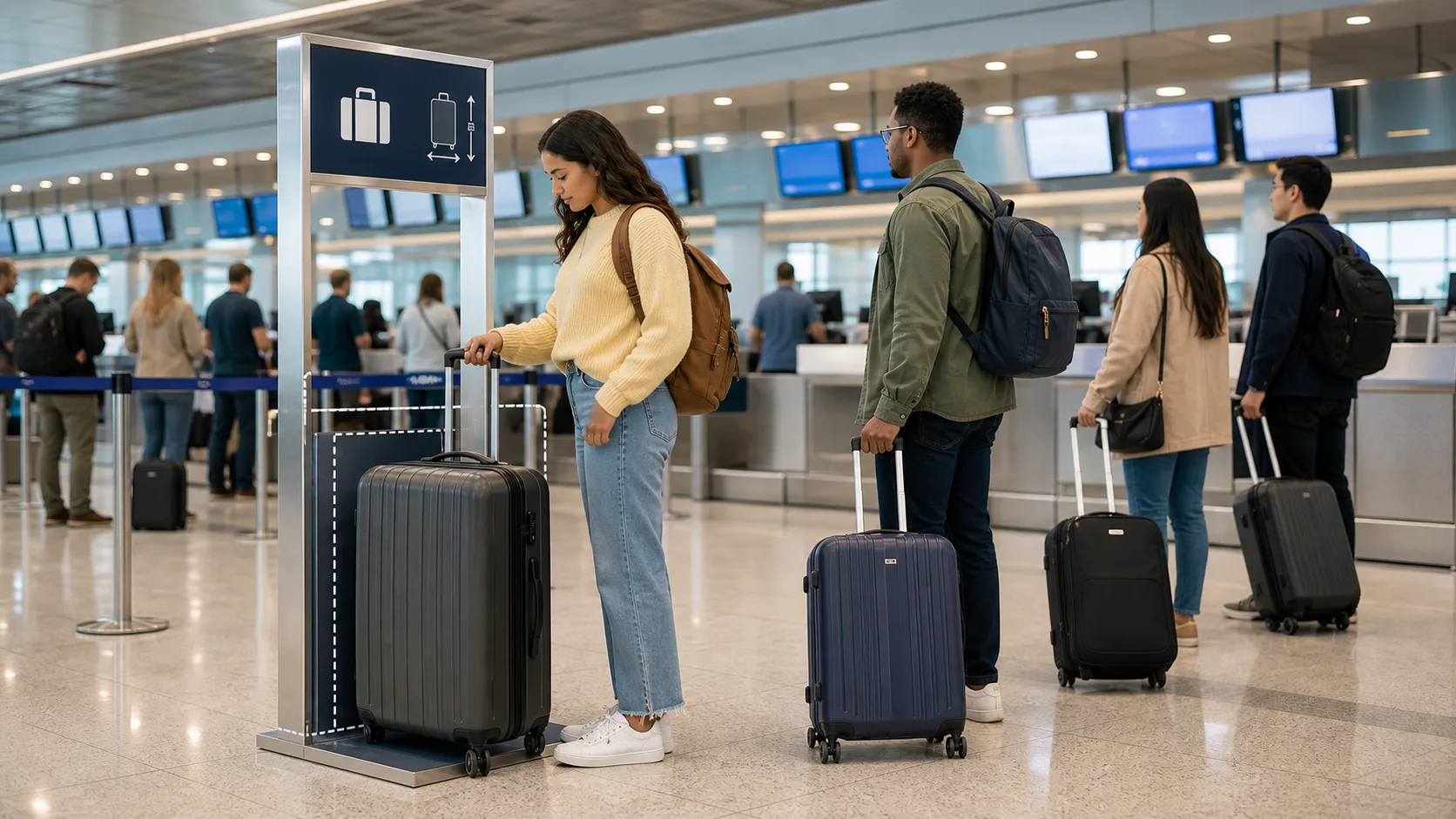
- Oversized baggage disqualifies you too. Same logic: if you’re already creating extra work, they pass.
- Loyalty members get first dibs. Airlines reward repeat customers, so the cheapest upgrade offers go to their frequent flyer members before anyone else.
- If business class is full, no upgrades period. Cheap upgrades only happen when the airline is desperate to fill empty seats.
- How you look still matters, unfortunately. Dressing in business attire genuinely increases your chances at the airport. Airlines try to keep the cabin feeling premium for the people who paid full price, so showing up in sweatpants quietly puts you out of the running. We don’t love this policy, but it’s how it works.
- Connecting flights can disqualify you. Airlines look at the lowest class across all your legs of a connecting flight. So if you want a business class upgrade, every leg should already be premium economy or higher.
Tip: If you want carry-on luggage that fits the part without paying Tumi prices, Travelpro is a quiet workhorse. Their bags are more durable than Samsonite at similar price points, and they actually supply over 90 different airline crews with custom luggage. The [amazon link=”B07DLDWKN3″ title=”Travelpro Platinum Elite international carry-on”] is what I’d grab for business travel.
How to Score a Cheap Business Class Upgrade
Here are the four real ways to get a discounted business class seat, ranked from most reliable to least.
Option 1: Use a Business Class Broker
The most consistent way to score a cheap business class upgrade is through a specialized broker. Sites like businessclassconsolidator.com, business-class.com, and businessclassexperts.com exist for exactly this purpose. (We’re not affiliated with any of them. Just naming a few legit options.)
When airlines can’t fill business class seats through normal channels, they offload them to third-party brokers. Brokers usually score 20 to 70% off the published price, take a 10 to 20% commission, and pass the savings to you. The math still works in your favor.
Even if you don’t book through a broker, check their prices first. It gives you a real benchmark for what the upgrade should actually cost so you don’t overpay through other channels.
Option 2: Upgrade Online Before You Get to the Airport
The next most reliable option is online upgrade bidding or accepting an emailed upgrade offer before your flight. Most online upgrades are reserved for frequent flyer members, so make sure you’re enrolled in the airline’s program even if you only fly with them once a year.
Upgrade bidding works like an auction. Some airlines (most international carriers, fewer US ones) let you bid on upgrades 24 to 72 hours before departure. Bids usually start around $100 to $200, and the highest bidders get the seats. Some airlines do points-based bidding instead.
Airlines also email last-minute upgrade deals to their loyal customers, usually between 7 days and 24 hours out. These tend to be the best online prices.
Read Next: Why Can’t I Check In Online?
Option 3: Ask at the Check-In Counter
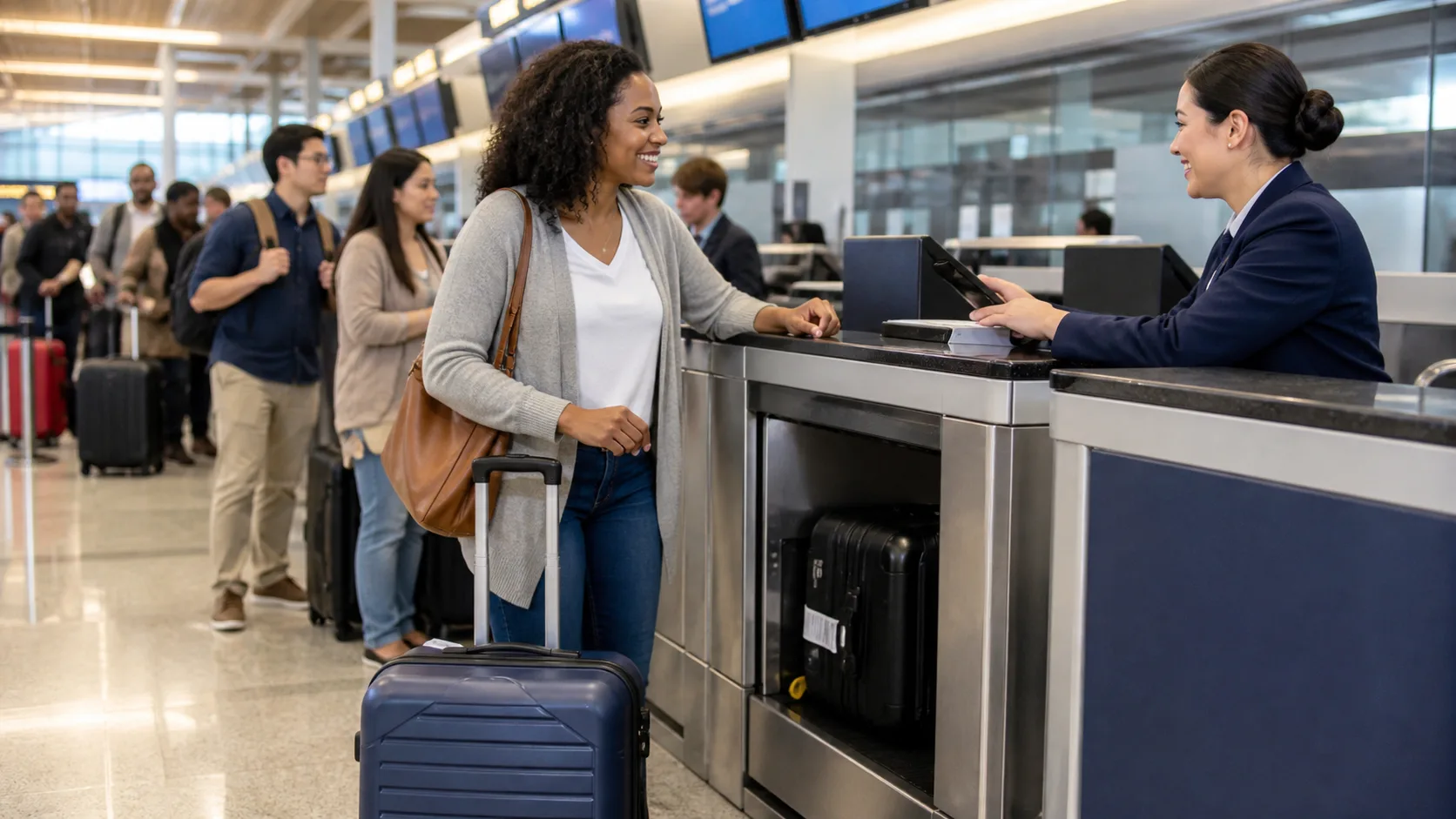
If business class still has empty seats, the airline will offer discounted upgrades at the check-in desk. Honestly, this happens maybe once every 5 to 10 flights. Online channels usually fill the seats first.
That said, when it does happen, airport upgrades tend to be among the cheapest. The airline is desperate to bump someone up, often because the flight is overbooked or they’re trying to make room for a family to sit together.
To improve your odds at the counter:
- Call the airline that morning before heading to the airport and ask about upgrade availability.
- If you can’t reach a call center, just arrive early and ask at check-in directly.
- Listen for gate announcements about overbooked flights.
- Look the part. Dress code still factors in.
- Fly solo, no pet, no oversized luggage.
- Be flexible on flight time. Volunteering for the next flight if they’re overbooked sometimes earns you a free or cheap upgrade.
Option 4: Ask After You Board
On rare flights, business class upgrades get offered to passengers after boarding but before takeoff. Maybe once every 10 to 20 flights, in our experience.
To catch one of these, you have to be first in line. When you board, quietly let the flight attendant know you’re interested in upgrading if anything opens up. They’ll relay it to whoever handles upgrades, and if there’s space, they’ll come back with an offer. Usually the cheapest one of the day.
Should You Even Upgrade to Business Class?
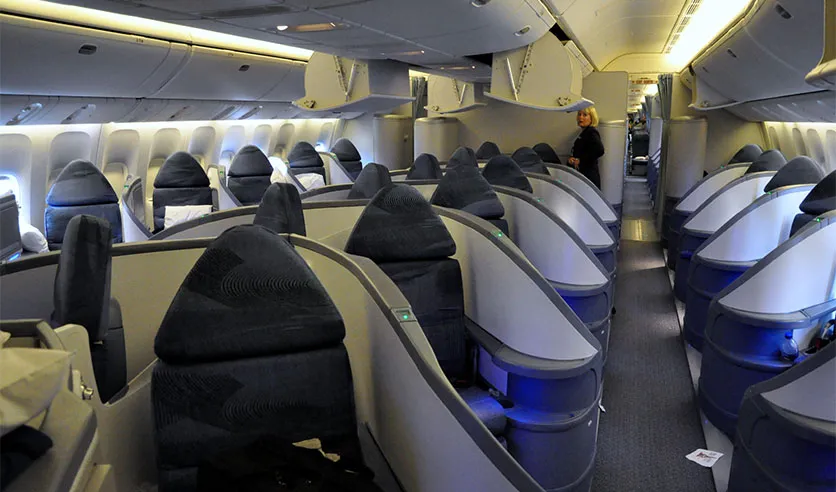
Honest answer: it depends entirely on flight length and how cheap the upgrade is.
The benefits of business class are real:
- Way more legroom (often a lie-flat seat on long-haul)
- Free drinks, including alcohol
- Actual food, not airline food
- Higher checked baggage allowance
- Faster check-in, priority boarding, and quicker baggage claim after landing
- Lounge access at the airport
- Amenity kits with noise-cancelling headphones, slippers, eye masks, and toiletries
But here’s the truth: upgrading to business class only really makes sense for long-haul flights. On a 2-hour domestic hop, the value over economy is marginal. On a 10-hour transatlantic redeye, it’s transformative.
I’d never pay $3,000 for a business class upgrade. But $200 for a lie-flat seat on a 9-hour flight to Europe? That’s a different conversation entirely. The break-even depends on what you can afford and how badly you want to arrive rested.
How to Get a Free Upgrade to Business Class
Free upgrades happen, but they’re rare. Real talk: most travelers will get bumped up for free maybe once every 50 to 100 flights, even if they do everything right.
Free upgrades only happen when the airline can’t move seats even at heavily discounted prices. When they do, the upgrades go to their most loyal customers first.
To improve your odds:
- Be loyal to one airline. Concentrate your flying with a single carrier and join their frequent flyer program.
- Fly solo. Same logic as paid upgrades. Easier to bump one person than a group.
- Skip the pet carrier and oversized luggage.
- Fly during peak times. Overbooked flights create more bump opportunities.
- Be flexible on schedule. Volunteering for the next flight when they’re overbooked sometimes earns a free upgrade as a thank-you.
Smart Tactics for Upgrading to Business Class
- Combine small cash upgrades with frequent flyer points. Going economy to business in one shot is expensive and often not allowed. Better play: pay $100 to $150 cash to get to premium economy, then use frequent flyer points for the second jump to business. Total cost is usually less than upgrading two classes at once.
- Always upgrade the longest leg first. If you’re connecting, the legroom and lie-flat seat matter way more on a 9-hour flight than on a 2-hour hop.
- Don’t blow your points on bad value. Calculate what the upgrade would cost in cash, then check the points cost. Some programs are way more generous than others. Air France/KLM Flying Blue runs about 1.4 cents per point, while United MileagePlus is closer to 1 cent. Spend your points where they’re worth more.
- Check how full the cabin is 24 hours out. Log into the airline website 72 to 24 hours before your flight and try to change your seat. You can usually see how empty business class is. If there’s lots of open space, hold off on the online upgrade and try at the counter or after boarding for a cheaper deal.
Upgrading to Business Class on Different Airlines
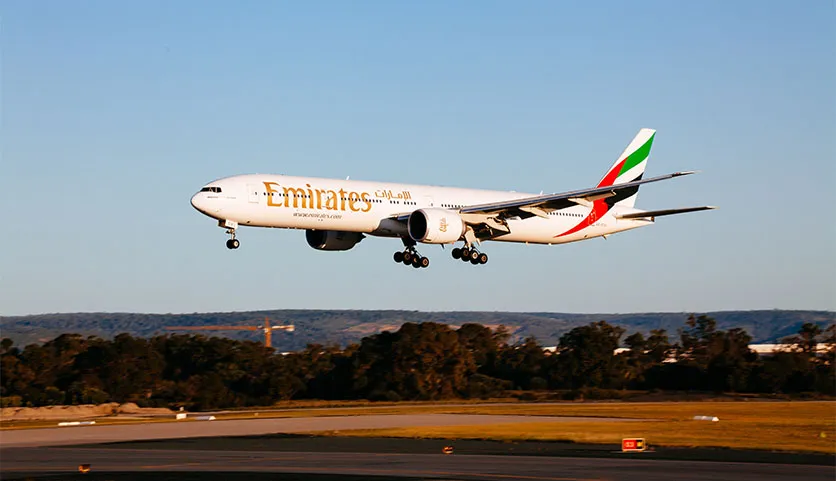
Each airline has its own upgrade culture. Here’s how four major carriers tend to handle it.
Qatar Airways
Qatar usually emails cash and points upgrade offers about 1 to 2 weeks before departure, in the $200 to $700 range, slightly cheaper than the full business fare. Airport upgrades happen often too. One frequent flyer reported getting upgraded at the airport 6 out of 7 attempts.
One catch: Qatar upgrade passengers don’t get lounge access. If lounges matter to you, factor that in.
Turkish Airlines
Turkish has a useful quirk. You can only upgrade one class with points, but cash upgrades let you jump multiple classes. So with cash, you can go from regular economy directly to business.
Upgraded passengers get full business class perks, lounges included. Turkish typically emails upgrade deals 1 to 2 weeks out and occasionally offers them at the check-in counter.
Emirates
Emirates plays it tighter. Many travelers report never getting an airport upgrade with Emirates. Their model relies almost entirely on Skywards loyalty members, and they push offers via email.
Emirates offers both cash and points upgrades, but their points upgrades almost always end up being the cheaper route. If Emirates is your regular airline, the Skywards game is worth playing.
British Airways
BA emails business class upgrade offers on most flights. The cheapest upgrades come through Avios (BA’s points) when going from premium economy to business. With cash, you can also upgrade from economy for $700 to $1,000.
Upgraded passengers get full business class benefits including lounges. Last-minute counter upgrades happen sometimes and tend to be the cheapest of all.
Final Thoughts on Cheap Business Class Upgrades
You can save real money on business class upgrades if a few of these are true:
- You’re flexible on flight time
- You’re flying solo
- You’re enrolled in the airline’s loyalty program
- You’re flying off-peak
- You’re okay flying economy occasionally if no upgrade comes through
On transatlantic flights, last-minute upgrades typically save $300 to $700 versus paying upfront. The savings get even better when you stack a small cash upgrade (economy to premium economy for $100 to $150) with a points upgrade for the second jump (usually 15,000 to 50,000 points).
The general rule: the closer you get to departure, the cheaper upgrades become. But there’s a tradeoff. The closer you get, the less likely an upgrade exists at all. Find the sweet spot and the seat up front gets a lot more affordable.