Reader-supported. We may earn a commission on purchases through our links. Disclosure ›

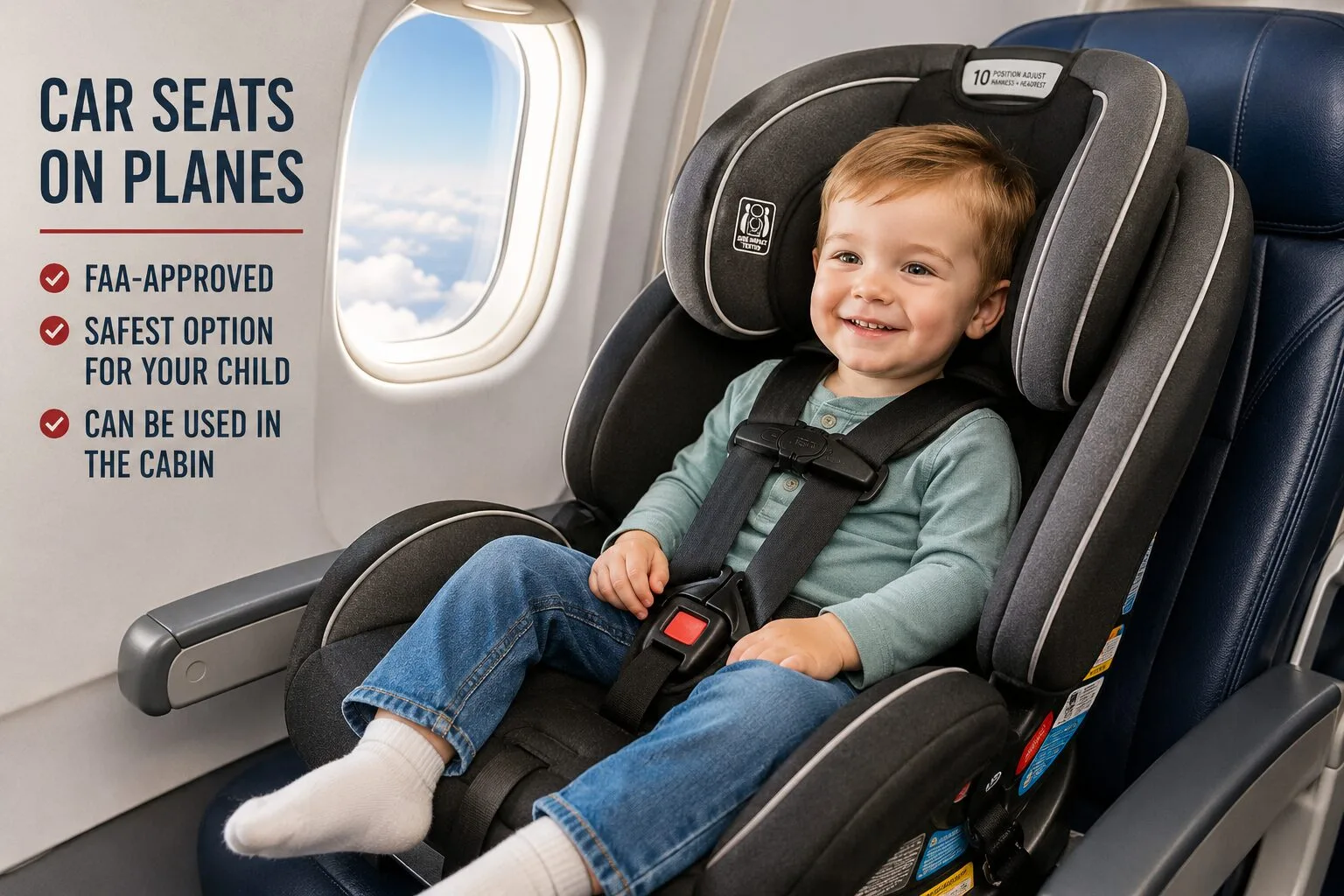
Yes, you can bring a car seat on a plane. TSA allows child car seats in both carry-on and checked bags, and many airlines let you use an FAA-approved car seat in the cabin if your child has their own purchased seat.
You can also gate-check or check a car seat for free on many U.S. airlines, even if your infant is flying as a lap child. The best option depends on whether you want to use the car seat during the flight, gate-check it before boarding, or check it with your luggage.
This guide explains when you can bring a car seat on a plane, when it can be used in the cabin, how gate-checking works, what TSA requires, and how to avoid damage when flying with a baby or toddler.
Can I Bring a Car Seat on a Plane?
Yes, you can bring a car seat on a plane. TSA allows child car seats in carry-on bags and checked bags, but airline rules decide whether the car seat can be used in the aircraft cabin.
In most cases, your car seat will be handled one of three ways:
- Used in the cabin if it is FAA-approved and your child has their own seat
- Gate-checked before boarding
- Checked at the ticket counter with your luggage
If you are wondering, “can I bring a car seat on a plane,” the answer is yes. The bigger question is whether you want to use it onboard or check it for free.
1. You Can Use a Car Seat in the Cabin If Your Child Has a Seat
You can bring a car seat into the cabin if you purchased a separate seat for your child and the car seat is approved for aircraft use.
The FAA strongly recommends using an approved child restraint system for young children instead of holding a child on your lap. This is especially important during turbulence, takeoff, landing, or sudden movement.
To use a car seat in the cabin, look for a label that says:
“This restraint is certified for use in motor vehicles and aircraft.”
If the car seat does not have that label, the airline may not allow you to use it during the flight.
2. The Car Seat Must Be FAA-Approved
Most infant car seats and convertible car seats are FAA-approved, but you should always check the label before flying.
Good options usually include:
- Rear-facing infant car seats
- Convertible car seats
- Forward-facing car seats with an aircraft approval label
- FAA-approved child restraint systems
Car seats and restraints that may not work for in-flight use include:
- Backless booster seats
- Some belt-positioning boosters
- Car seats without the FAA aircraft-use label
- Bulky seats that are too wide for the airplane seat
Booster seats can be transported on a plane, but many are not approved for use during takeoff, landing, or turbulence because they require a shoulder belt. Airplane seats usually only have lap belts.
3. Car Seat Width Matters
Before you bring a car seat on a plane, check the width of the car seat and compare it with the airline seat width.
Many economy airplane seats are around 17 to 19 inches wide, but this can vary by airline and aircraft. Some convertible car seats are wide, especially near the base or shoulder area.
Before your flight, check:
- The width of your car seat
- The seat width listed by your airline or aircraft type
- Whether your car seat fits rear-facing or forward-facing
- Whether the armrest can move up
- Whether the car seat must be placed in a window seat
A narrower car seat is usually easier to install on a plane. If your seat is very wide, you may still be able to check or gate-check it, but using it in the cabin could be difficult.
4. Gate-Checking a Car Seat Is Usually Free
Gate-checking is one of the most common ways families travel with a car seat.
Gate-checking means you bring the car seat through the airport and to the boarding gate. The gate agent tags it, and airline staff load it into the cargo hold before boarding. You usually pick it up near the jet bridge or aircraft door after landing.
Many U.S. airlines allow families to gate-check a car seat for free. American Airlines says each ticketed customer traveling with a child can check one stroller and one car seat free of charge. Delta says children’s strollers and child safety seats are not counted as standard baggage and can be checked for free.
Gate-checking is a good option if:
- Your child is flying as a lap infant
- You need the car seat at your destination
- You do not want to check it at the ticket counter
- You are also bringing a stroller through the airport
- You want to reduce the time the car seat spends in baggage handling
If you plan to gate-check, ask the gate agent where the car seat will be returned after landing. Some airports return gate-checked items at the jet bridge, while others may send them to baggage claim.
5. You Can Check a Car Seat as Baggage
You can also check a car seat at the ticket counter with your regular luggage.
On many airlines, car seats are checked for free when you are traveling with a child. However, you should confirm the policy with your airline because rules can vary by carrier, route, and country.
Checking a car seat at the ticket counter may be easiest if:
- You do not need it in the airport
- You are using a stroller instead
- The car seat is too bulky to carry through security
- You are traveling with multiple child items
The downside is that checked car seats are more exposed to rough handling. They move through the baggage system, may be stacked with luggage, and can get dirty or damaged.
If you check a car seat as baggage, use a padded car seat travel bag if possible.
6. TSA Allows Car Seats Through Security
TSA allows child car seats in both carry-on and checked bags.
At airport security, the car seat may go through the X-ray machine if it fits. If it does not fit, TSA may inspect it manually.
Before you reach the checkpoint, remove loose items from the car seat, including:
- Toys
- Blankets
- Snack cups
- Extra straps
- Loose covers
- Small bags attached to the seat
This makes screening faster and reduces the chance of losing something at the checkpoint.
7. A Car Seat Travel Bag Helps Prevent Damage
If you are gate-checking or checking a car seat, use a car seat travel bag.
A travel bag helps protect the car seat from:
- Dirt
- Scratches
- Rain
- Loose straps getting caught
- Minor baggage handling damage
A padded bag is best, especially for expensive car seats. A basic cover or large bag is still better than handing over a bare car seat.
Before you check it, take photos of the car seat from several angles. If it comes back damaged, report the issue to the airline before leaving the airport.
Cabin vs. Gate Check vs. Checked Car Seat
Here is the simple breakdown.
| Option | Best For | Main Risk |
|---|---|---|
| Using it in the cabin | Children with purchased seats | Car seat must be FAA-approved and fit the airplane seat |
| Gate-checking | Families who need the car seat at the destination | Still handled in cargo and can get dirty or damaged |
| Checking at ticket counter | Bulky seats or families carrying less through the airport | More time in the baggage system |
For safety during the flight, using an FAA-approved car seat in a purchased seat is the best option. For convenience, gate-checking is usually the easiest option.
Can I Bring a Car Seat and Stroller on a Plane?
Yes, many airlines allow families to bring both a car seat and a stroller when traveling with a child.
In many cases, you can check both items for free, but the exact rules depend on your airline. Some airlines may allow both to be checked at the ticket counter, while others may limit how many items can be gate-checked.
If you are bringing both, check your airline’s policy for:
- Whether the car seat is free to check
- Whether the stroller is free to check
- Whether both items can be gate-checked
- Whether one item must be checked at the ticket counter
- Where gate-checked items are returned after landing
If you are already bringing a stroller, our guide on bringing a stroller on a plane explains when to gate-check it and when compact strollers may be allowed onboard.
Can You Use a Rear-Facing Car Seat on a Plane?
Yes, you can use a rear-facing car seat on a plane if it is FAA-approved, your child has a purchased seat, and the seat fits properly.
Rear-facing car seats are usually best placed in a window seat so they do not block another passenger’s path to the aisle.
Rear-facing seats can take up more room than forward-facing seats, especially in tight economy rows. If you are flying on a smaller aircraft, check with the airline before the trip.
Where Should a Car Seat Go on the Plane?
A car seat is usually installed in a window seat.
Airlines typically do not allow car seats in exit rows. They may also restrict car seats from aisle seats because they can block another passenger’s path during boarding or an emergency.
The safest and least disruptive option is usually:
- Window seat
- Non-exit row
- Forward-facing or rear-facing depending on the child’s age and seat type
- Installed according to the car seat manual
If you are traveling with two adults, one adult can sit next to the car seat while the other sits in the aisle or nearby.
Tips for Flying With a Car Seat
These tips can make the airport and flight easier.
- Check the FAA approval label before you leave home.
- Measure the car seat width before flying.
- Book a window seat if using the car seat in the cabin.
- Board early so you have time to install it.
- Bring the car seat manual or a photo of the installation instructions.
- Use a padded travel bag if gate-checking or checking it.
- Remove loose accessories before security.
- Take photos before handing it to airline staff.
- Confirm your airline’s car seat policy before your trip.
Final Verdict
So, can I bring a car seat on a plane? Yes. TSA allows car seats in carry-on and checked bags, and many airlines allow families to check or gate-check car seats for free.
If you want your child to use the car seat during the flight, you need to buy a seat for your child and use an FAA-approved car seat that fits the airplane seat.
If your child is flying as a lap infant, you can usually gate-check or check the car seat instead. For the smoothest trip, check your airline’s policy, bring a protective travel bag, and confirm the FAA approval label before you fly.
FAQs About Bringing a Car Seat on a Plane
Can I bring a car seat on a plane for free?
Most U.S. airlines allow families to check or gate-check a car seat for free when traveling with a child. Confirm with your airline before flying because policies can vary.
Can you use a car seat on a plane?
Yes, you can use a car seat on a plane if your child has their own seat and the car seat is FAA-approved for aircraft use.
Does a car seat count as a carry-on?
A car seat used in the cabin usually requires a purchased seat for the child. A gate-checked or checked car seat usually does not count as your standard carry-on allowance.
Can you gate-check a car seat?
Yes, many airlines allow gate-checking a car seat for free. You bring it to the gate, get it tagged, and pick it up after landing.
Can you check a car seat at the ticket counter?
Yes, you can usually check a car seat at the ticket counter. Many airlines allow this for free when traveling with a child.
What car seats are FAA-approved?
FAA-approved car seats have a label that says the restraint is certified for use in motor vehicles and aircraft. Most infant and convertible car seats have this label, but you should check before flying.
Can I bring a booster seat on a plane?
You can bring a booster seat on a plane, but many booster seats cannot be used during the flight because aircraft seats usually only have lap belts. Booster seats can usually be checked or carried onboard as baggage.
Is it better to gate-check or check a car seat?
Gate-checking is usually better because the car seat spends less time in the baggage system. However, checking at the ticket counter may be easier if the seat is bulky or you do not want to carry it through the airport.
Related Reading
- Can I Bring a Stroller on a Plane?
- Does a Diaper Bag Count as a Carry-On?
- What Counts as a Personal Item on a Plane?
- Carry-On Rules for International Flights (2026)
- Airport Security Rules: What to Remove Before TSA
Author
Can I bring something else on a plane? Search TSA rules ›