Reader-supported. We may earn a commission on purchases through our links. Disclosure ›
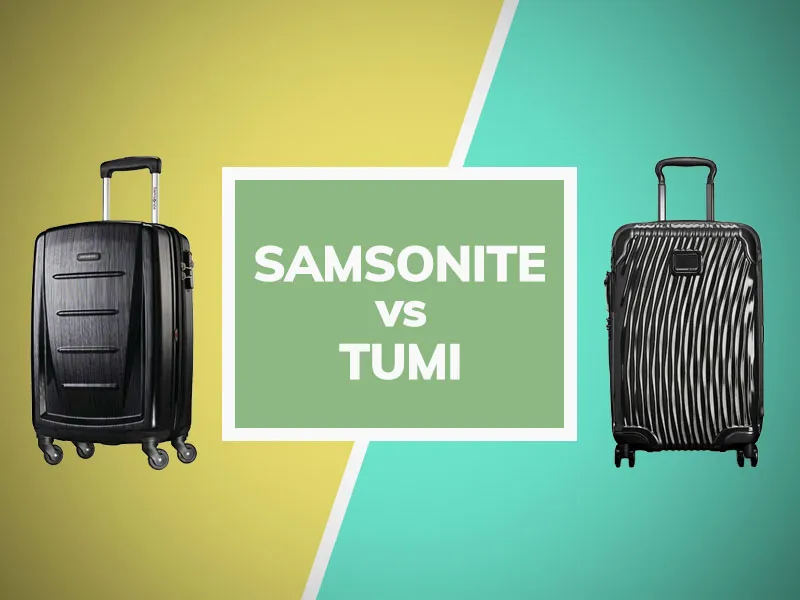
Away is the better choice for most buyers. It costs 60% less than Tumi, has an excellent lifetime warranty that covers airline transport damage, and makes genuinely durable polycarbonate and aluminum hardside bags. Tumi is slightly more durable, has more features (suiter compartment, Tumi Tracer, Omega zippers), and offers softside options that Away doesn’t. But at 2.4x the price, Tumi needs to be better by a lot, and it isn’t.
The one case where Tumi makes sense: frequent business travelers who specifically need softside bags with suiter compartments, or whose employers cover the cost.
Quick Brand Overview
Tumi: Founded in 1975 in the US. Acquired by Samsonite in 2016. Originally built for business travelers and airline crews with extremely durable materials. Still the most feature-complete luggage brand in the market but no longer offers a lifetime warranty since the acquisition.
Away: Founded in 2015 in New York. Direct-to-consumer brand that grew quickly by offering premium-feeling polycarbonate suitcases with lifetime warranties at half the price of Tumi. Only makes hardside bags in plastic and aluminum. Skips the softside category entirely.
Weight: Away Is Slightly Lighter
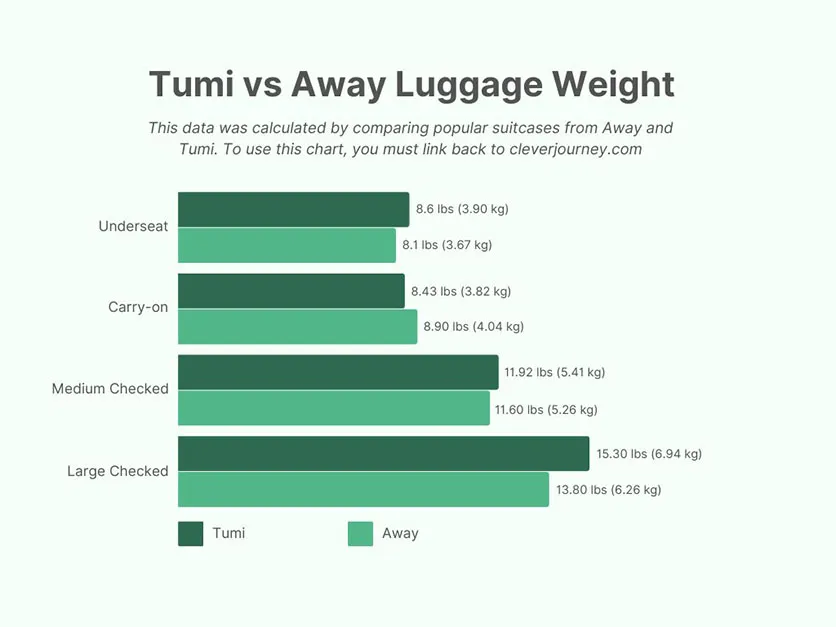
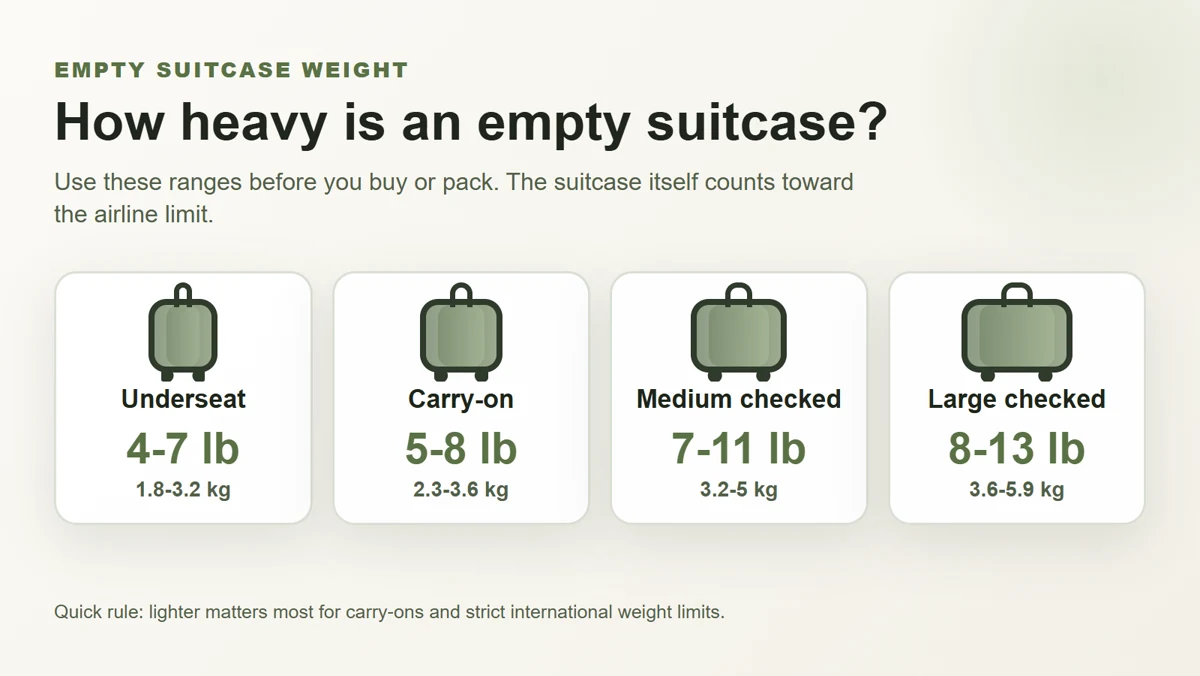
Away averages 5% lighter than Tumi, but both brands are among the heaviest available. Across 31 luggage brands ranked by weight, Away placed 30th and Tumi 31st (heaviest of all). For reference, Samsonite sits at 11th, about 35% lighter on average than either brand.
The weight is the price of durable materials and premium construction. It matters most on European budget airlines with strict 10 kg carry-on limits. Neither brand is well-suited for that use case. For US domestic travel with standard weight limits (22 to 30 lbs), both pass easily.
Specific weight comparison:
- Away Classic Carry-on: 7.1 lbs (3.22 kg), right at the category average for hardside carry-ons (7.11 lbs)
- Away Aluminum Carry-on: 10.7 lbs (4.85 kg), almost 1 lb lighter than Tumi’s aluminum equivalent
- Tumi Latitude Carry-on: 6.22 lbs (2.82 kg), 15% below average for plastic hardside carry-ons in this size
- Tumi Alpha 3 Extended Trip (checked): 17.9 lbs (8.11 kg), heaviest model from either brand
Durability: Tumi Wins, But Not by Much
Both brands build bags meant for serious, long-term use. The difference is real but narrow.
Away uses polycarbonate for plastic bags (the best luggage plastic) and aircraft-grade aluminum for their aluminum line. No reinforced corners on plastic models, though customer reviews show almost no complaints about structural failure, which is the more meaningful data point.
Tumi uses polycarbonate, aluminum, and their proprietary Tegris/SRPP Ballistic composites (woven polypropylene engineered to approximate polycarbonate durability at lower weight) for hardside. Ballistic nylon for softside. Omega Closure zipper system designed to detach cleanly from conveyor belts rather than ripping the zipper track. Corner reinforcements on both softside and hardside.
Expected lifespan with frequent use:
- Away: 10+ years with regular travel, backed by a warranty if something fails
- Tumi: 10 to 20+ years with heavy use, documented by long-time customer reviews
For most travelers who aren’t flying weekly with checked bags, Away’s durability is sufficient. The lifetime warranty also shifts the calculus: if Away breaks, you get it repaired or replaced. Tumi’s durability advantage only matters if you’re burning through bags faster than warranty coverage.
Size: Both Fit Airline Limits
Both brands size their carry-ons to fit within the standard 22 x 14 x 9 inch US airline limit, unlike Samsonite which consistently runs over. Away’s bags land at 22 x 14 x 9 inches (56 x 36 x 23 cm). Tumi offers both continental (22 x 16 x 9) and international (22 x 14 x 9) versions on aluminum models.
For checked luggage (62 linear inch limit): all Away checked bags fell within limits. Tumi had one exception, the [amazon link=”B07MMMJP3P” title=”Alpha 3 Extended Trip”] at 64 linear inches. Both are more compliant than Samsonite or Delsey on this metric.
Customer Reviews: Away Leads by a Wide Margin
Away averages 4.9 stars. Tumi averages 4.29 stars. Out of 31 luggage brands, Away ranks 1st and Tumi 28th. The gap is real, not statistical noise.
The most common Away complaint: the power bank compartment sometimes ejects the battery accidentally. The most common Tumi complaint: warranty friction, slow support response times, and bags tipping over due to weight distribution. Neither brand generates significant complaints about structural failure or durability, which is a meaningful contrast to mid-range brands.
Features: Tumi Wins on Volume, Away on Simplicity
Tumi feature highlights
- Tumi Tracer: 20-digit code on the exterior for lost luggage recovery through Tumi support (anonymized)
- TSA-approved combination locks on all models including softside
- Expandable zippers on almost all models (adds 10 to 20% capacity)
- Dual-access front compartment on Alpha 3 (quick access without opening the bag fully)
- Interior and exterior luggage tags on all models
- USB charging port on select models (internal pocket for power bank, external USB)
- Suiter compartments with garment sleeve and hanger bracket on most bags
- Double spinner wheels (8 total) on all models
- Omega Closure zippers designed to release from conveyor belts cleanly
- Dura-fold reinforced corners on both hardside and softside
Away feature highlights
- Built-in removable power bank on most models (optional upgrade, hidden under the retractable handle, pops out for security screening)
- Double rubber-coated spinner wheels on all models (quiet and smooth)
- TSA-approved combination locks on all models
- Laundry bag included with every suitcase (separates dirty from clean)
- Leather luggage tags on all models
- Expandable zippers on select models
- Front laptop pocket on the larger carry-on version
- Tie-down panels on both sides of the interior
Tumi’s feature list is longer, but many features (Tracer, Omega zippers, suiter compartment) are genuinely useful mainly for frequent business travelers. Away’s simpler feature set covers most of what leisure and occasional travelers need, plus adds the rubber-coated wheels and laundry bag that Tumi skips.
Price: Away Costs 60% Less
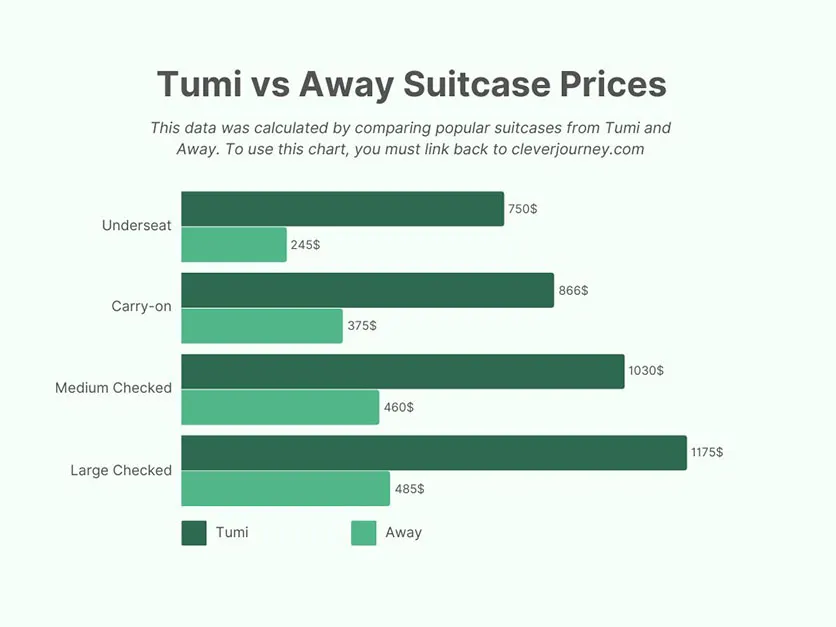
Away averages $391 per bag. Tumi averages $955. You can buy two Away suitcases for the price of one Tumi with money left over. Why is Tumi expensive? Brand positioning, primarily. The materials and features don’t justify a 2.4x price premium over Away.
For comparison: Briggs & Riley, which matches Tumi’s durability and has a better warranty, averages $579 per bag. Even at that price, Away represents stronger value for most traveler profiles.
Warranty: Away Wins
Away’s limited lifetime warranty covers any defect that affects the suitcase’s functionality: cracked shells, broken wheels, handles, zippers, and transportation damage. Covers all related shipping. Only exclusions are cosmetic damage, accidents, misuse, and normal wear and tear.
Tumi’s warranty structure:
- Year 1: All defects covered including transportation damage, all shipping covered
- Years 2-5: Manufacturing defects only, transportation damage NOT covered, you pay inbound shipping
- After year 5: Paid repairs only
Away’s warranty is functionally better. The airline transport damage coverage is particularly meaningful: Tumi only covers that in year 1, Away covers it for the life of the bag. If an airline damages your bag, Away repairs or replaces it. With Tumi after year 1, you pay out of pocket.
Verdict: Which Should You Buy?
Buy Away if you want premium hardside luggage at a fair price. The Classic carry-on is the best value in hardside luggage at any price point, the lifetime warranty covers airline damage, and the reviews back it up. The aluminum carry-on is also genuinely competitive with Tumi’s aluminum line at nearly half the price.
Buy Tumi if: you need softside bags (Away doesn’t make them), you specifically need the suiter compartment and Tumi Tracer, or your employer covers travel gear costs. For personal spending, the price premium is hard to justify.
Also worth considering: If you need a softside bag and Away doesn’t cut it, look at Briggs & Riley before defaulting to Tumi. The [amazon link=”B00XDIRKRC” title=”Baseline carry-on”] costs about $100 less than a comparable Tumi softside model, comes with a better lifetime warranty, and matches the durability.
Best Bags From Each Brand
Best Away Polycarbonate: The Classic Carry-on
[columns][col]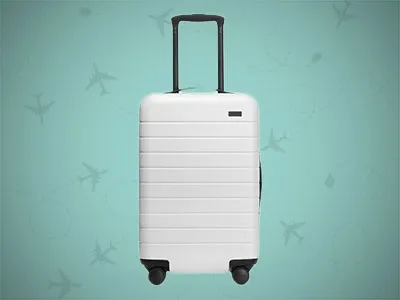 [/col][col][table id=386 /][/col][/columns]
The Away Classic carry-on is sized at 22 x 14 x 9 inches (56 x 36 x 23 cm), within the standard US carry-on limit. At 7.1 lbs, it lands right at the average for hardside carry-ons. Built from polycarbonate, TSA combination lock, rubber-coated double spinner wheels, laundry bag, tie-down panels, leather luggage tag, and side and top handles.
The one complaint that shows up in reviews: the power bank holder sometimes ejects the battery while rolling. The power bank is an optional upgrade, so the base model doesn’t have this issue. Interior is clean and practical for most trip lengths. Lifetime warranty covers airline damage. At under $400, it’s one of the strongest values in premium luggage.
Best Tumi Polycarbonate: Latitude Carry-on
[columns][col][amazon fields=”B0793NBJF8″ value=”thumb” image=”1″ image_size=”large” image_class=”image-layout-1″][/col][col][table id=368 /][/col][/columns]
The [amazon link=”B0793NBJF8″ title=”Tumi Latitude”] is Tumi’s lightest plastic carry-on at 6.22 lbs, 15% below the category average. Built from SRPP Ballistic composite, sized at 22 x 14 x 9 inches, with double spinners, TSA lock, Tumi Tracer, and suit hanger slot. Glossy finish scratches easily. Costs more than twice the Away Classic. Worth it primarily if the Tracer and suit hanger are important to your workflow.
Best Away Aluminum: The Aluminum Carry-on
[columns][col]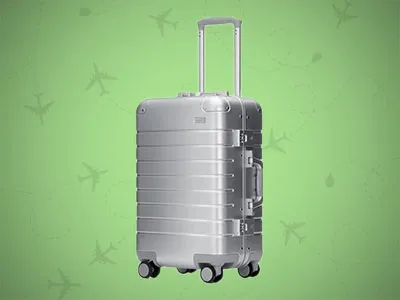 [/col][col][table id=376 /][/col][/columns]
Away’s aluminum carry-on weighs 10.7 lbs at 22 x 14 x 9 inches. Built from aircraft-grade aluminum, dual TSA combination locks (two separate latches), rubber-coated double spinner wheels with spring-loaded handles. Lifetime warranty covers airline damage. Priced significantly below comparable aluminum bags from Rimowa and Tumi.
Durability expectations: aluminum bends instead of cracking, so the bag will show dents over time but should last decades. If you want the lifetime-luggage experience at a rational price, this is the pick. The two-lock system is also a genuine security upgrade over single-lock polycarbonate bags.
Best Tumi Aluminum: 19 Degree Continental
[columns][col][amazon fields=”B01N7MYSQA” value=”thumb” image=”1″ image_size=”large” image_class=”image-layout-1″][/col][col][table id=366 /][/col][/columns]
The [amazon link=”B01N7MYSQA” title=”Tumi 19 Degree Aluminum”] is sized at 22 x 16 x 9 inches (continental) or 22 x 14 x 9 inches (international version). At 11.8 lbs, it’s nearly 1 lb heavier than Away’s aluminum. Aircraft-grade aluminum shell, corner guards, double spinner wheels, two TSA locks, suit hanger bracket, Tumi Tracer, and a fabric divider with mesh pockets on both sides.
The differences versus Away: Tumi has a suit hanger bracket and Tracer, Away has rubber-coated wheels and is lighter. Tumi costs significantly more. At full price, it’s hard to justify over Away unless you specifically need the suit hanger. On sale, it becomes more competitive.
Best Tumi Softside: Alpha 3 Dual Access
[columns][col][amazon fields=”B07MQWFCHC” value=”thumb” image=”1″ image_size=”large” image_class=”image-layout-1″][/col][col][table id=369 /][/col][/columns]
The [amazon link=”B07MQWFCHC” title=”Tumi Alpha 3″] is where Tumi has no direct Away competition. Away doesn’t make softside bags, so the Alpha 3 is in its own lane here. Built from ballistic nylon at 22 x 14 x 9 inches, 10.07 lbs. Features: USB port, TSA lock, expandable zipper, dual-access front, suiter compartment with hanger bracket, Omega zippers, Tumi Tracer, eight double spinners. The weight is the main drawback.
For softside without the weight, the [amazon link=”B00XDIRKRC” title=”Briggs & Riley Baseline”] is 10 lbs as well but has a better warranty and costs less. See our full Briggs & Riley vs Tumi comparison.
Tumi vs Away: Frequently Asked Questions
Is Away luggage as good as Tumi?
Close, not quite equal. Tumi is slightly more durable, has more features, and makes softside bags that Away doesn’t. Away has better customer reviews, a better warranty (covering airline damage for life vs just year 1 for Tumi), and costs 60% less. For most travelers who don’t need softside or the Tumi feature set, Away is the better practical choice.
Does Away have a lifetime warranty?
Yes, a limited lifetime warranty. It covers any defect that affects the bag’s functionality: cracked shells, broken wheels, handles, zippers, and airline transport damage. All shipping is covered. Exclusions are cosmetic damage, accidents, misuse, and normal wear and tear.
Is Away luggage worth the price?
Yes. At around $391 average, Away sits in a price range where the quality is genuinely competitive with brands at twice the price. The polycarbonate construction and lifetime warranty are legitimately good for the cost. The only thing holding Away back from being an unambiguous recommendation is the lack of softside bags.
Does Away luggage hold up well?
Yes. Away has high customer review scores (4.9 stars, first out of 31 brands) and almost no structural failure complaints. The most common complaint is the power bank compartment accidentally ejecting the battery. Structural durability complaints are rare, which is the most meaningful data point for long-term bag quality.
Is Tumi worth the extra cost over Away?
For most buyers, no. The durability gap doesn’t justify a 2.4x price difference. Tumi is worth the premium if you need softside bags, use the suiter compartment regularly, or your employer covers the cost. Away’s warranty is actually better for travel damage than Tumi’s beyond year 1.
Is there a better alternative to both Away and Tumi?
Briggs and Riley is the best all-around frequent traveler bag at any price. The Baseline softside carry-on covers what neither Away (no softside) nor most Tumi models at a fair price can: comparable durability, better features (CX compression, external power bank pouch), and an unconditional lifetime warranty covering airline damage forever. Priced at about $650, between Away and Tumi.