Reader-supported. We may earn a commission on purchases through our links. Disclosure ›
TSA rules cover what you can and cannot bring through airport security, and most of them are straightforward once you know the logic behind them. The big categories are liquids, prohibited items, electronics, and powders. Here is a practical breakdown of each one, plus tips for getting through security faster.
The 3-1-1 Liquids Rule
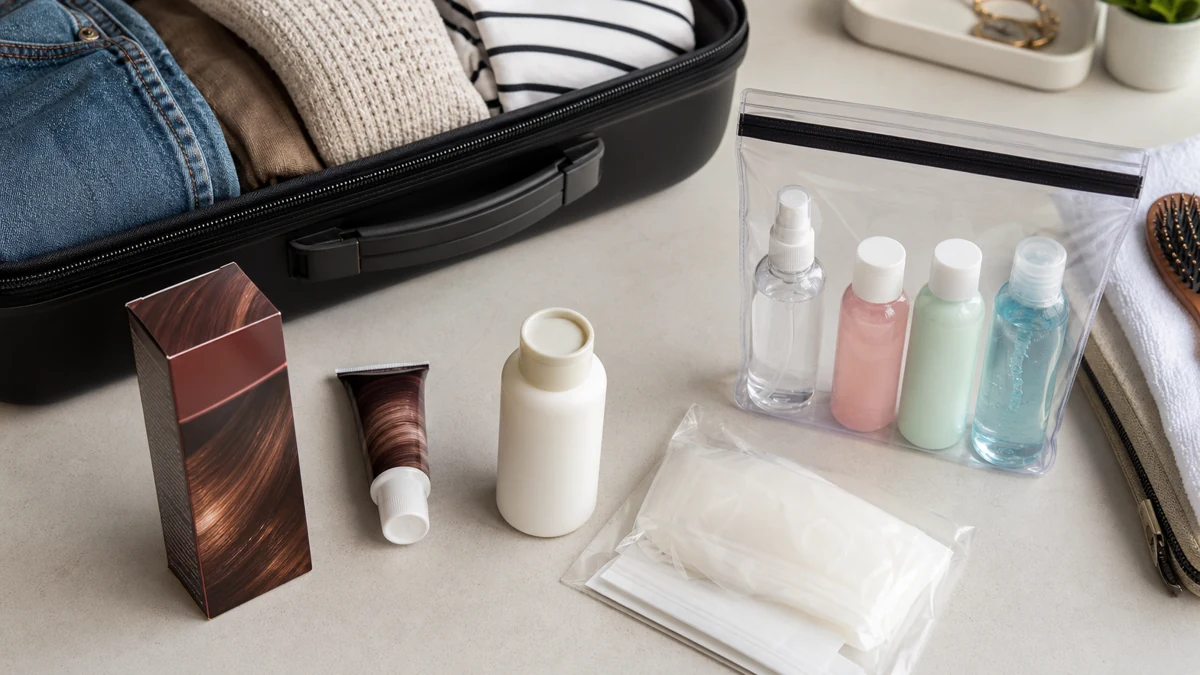
The most important TSA rule for carry-on bags. Every liquid, gel, cream, paste, and aerosol must be in a container of 3.4 oz (100ml) or less. All those containers must fit together in a single clear, quart-sized zip-top bag. One bag per passenger.
The limit is on the container size, not the amount inside. A 6 oz shampoo bottle that’s half empty still doesn’t pass. TSA agents check labels, not fill levels. See our full guide to quart-sized bags for flights for more detail on what counts as a liquid and what doesn’t.
Exemptions from the 3-1-1 rule: prescription liquid medications, baby formula and breast milk, and duty-free liquids purchased after the security checkpoint (in the sealed bag with receipt). Solid items — stick deodorant, solid shampoo bars, lip balm — do not count as liquids regardless of size.
Prohibited Items in Carry-On
Items that cannot go in carry-on bags include:
- Firearms and ammunition (must be declared, unloaded, and packed in a hard-sided locked case in checked baggage)
- Knives with blades over 4 inches (measured from the pivot point)
- Box cutters and razor blades (loose or in a case)
- Baseball bats, hockey sticks, golf clubs, and similar sports equipment
- Flammable liquids, explosives, and flares
- Self-defense sprays (pepper spray must go checked, in a very specific way)
- Lithium batteries over 100 watt-hours (note: these actually cannot go in checked bags either; they must travel in carry-on)
TSA maintains the full prohibited items list on their website, and you can search any specific item. When in doubt, check there first or contact @AskTSA on X (formerly Twitter).
Electronics at Security
Laptops must come out of your bag and go in a separate bin for standard screening. Tablets and e-readers do not need to come out, though some agents will ask. Phones stay in your bag or pocket.
If you have TSA PreCheck, you do not need to remove your laptop, take off your shoes, or take out your quart bag. You walk through the dedicated lane with your bag packed.
Your devices should be charged. TSA can ask you to power on a device if something about it raises a question during screening. A device that won’t turn on could require additional inspection.
Powders
Powders in carry-on are allowed but may receive extra attention if they’re over 12 oz (about 350 ml). Protein powder, creatine, dry shampoo, baby powder, and similar items all fall under this guideline. Over 12 oz, agents may ask to further examine the container. This is not a prohibition, just an additional screening step.
For powders over 12 oz, keep them in the original labeled packaging and put them at the top of your bag where they’re easy to access.
Food Through Security
Solid food can generally go through the checkpoint without issue. Liquids and gels fall under the 3-1-1 rule, which catches things people don’t always anticipate: peanut butter, yogurt, hummus, jams, and similar spreads all count as liquids or gels. Containers over 3.4 oz of those need to be in checked baggage or left behind.
Food you buy after the security checkpoint can be brought onto the plane without restriction.
TSA PreCheck and CLEAR
TSA PreCheck is a background check-based program that lets you use expedited security lanes. No shoes off, no laptop out, no quart bag removal. Costs $78 for five years and is worth it if you fly more than a few times a year. Apply at a TSA enrollment center.
CLEAR is a separate biometric identification service that verifies your identity using fingerprints or iris scanning, letting you skip the ID check portion of the line. CLEAR gets you to the front of the ID check, but you still go through the same security screening. PreCheck removes screening steps; CLEAR removes waiting in the ID line. They’re different products and work well together.
Tips for Getting Through Security Faster
- Wear slip-on shoes or shoes that come off quickly. Anything with multiple buckles or laces slows you down at standard lanes.
- Put your quart bag in an outer pocket or near the top of your carry-on. Digging for it at the bin is the most common cause of checkpoint slowdowns.
- Empty your pockets before you get to the conveyor. Keys, coins, and your phone all go in the bin. Do this before you reach the front of the line, not at it.
- Put your laptop in an easy-to-access sleeve if you have one. Pulling it out of a packed bag takes longer than sliding it out of a dedicated sleeve.
- Pick up your bins promptly on the other side. Leaving a bin on the belt while you sort yourself out blocks everyone behind you.
For specifics on individual items, see our guides on scissors on a plane, tweezers, and the 100ml liquid rule.
TSA Rules: Frequently Asked Questions
What is the 3-1-1 liquids rule?
All liquids, gels, creams, pastes, and aerosols in carry-on must be in containers of 3.4 oz (100ml) or less. All those containers must fit in a single quart-sized clear zip-top bag. One bag per passenger. The limit is on the container size, not how full it is.
Can you bring food through TSA?
Solid food yes, without restriction. Liquids and gels (including peanut butter, yogurt, hummus, and jams) fall under the 3-1-1 rule, so containers over 3.4 oz need to go in checked baggage. Food purchased after security has no restrictions.
Do you have to take your laptop out at security?
Yes, at standard lanes. Laptops go in a separate bin for screening. Tablets and e-readers can usually stay in your bag. With TSA PreCheck, you do not have to remove your laptop.
What is TSA PreCheck and is it worth it?
TSA PreCheck is a background-check program ($78 for 5 years) that gives you access to expedited security lanes where you don’t need to remove shoes, laptops, or your quart bag. Worth it for anyone who flies more than two or three times a year.
What happens if you accidentally bring a prohibited item?
TSA will flag it and give you options: you can return it to your car, give it to a companion who isn’t flying, mail it ahead, or abandon it. If it’s something that poses a security concern (a weapon), the situation may involve law enforcement. Most accidental violations are items like forgotten pocket knives.
Can you bring medication in carry-on?
Yes. Prescription and over-the-counter medications are allowed in carry-on in any quantity. Liquid medications over 3.4 oz are exempt from the 3-1-1 rule but must be declared separately at the checkpoint. Keep prescription medications in original bottles or with documentation if traveling internationally.
Author
Can I bring something else on a plane? Search TSA rules ›