Reader-supported. We may earn a commission on purchases through our links. Disclosure ›
Skipping a leg of a flight is often cheaper than booking a direct route, and that quirk has spawned a whole subculture of travelers gaming airline pricing. The trick has a name: hidden city ticketing.
Here’s how it works. Say you need to fly Dallas to New York. A direct flight costs $400. But a connecting flight from California to New York with a layover in Dallas costs $200. Buy the cheaper ticket, skip the first leg, and pocket the difference, right?
Not quite. Skipping a leg of a flight can backfire badly depending on which leg you skip and how the airline reacts. Sometimes you save $200. Sometimes you lose your entire ticket and your frequent flyer status with it.
This guide covers when skipping a flight leg actually works, when it’ll blow up in your face, and what penalties to expect.
What Happens When You Skip the First Leg of a Flight
Skipping the first leg of a connecting flight is almost always a bad idea.
When a passenger no-shows for the first leg, the airline automatically cancels every remaining leg on that ticket. Same goes for any non-final leg. Skip leg two of a three-leg trip and you’ve just lost leg three.
So if your plan was to buy a cheap connecting ticket and just skip the first segment? It doesn’t work. The airline’s computer system catches it the second you don’t board, and the rest of your itinerary disappears.
When You CAN Skip the First Leg
There’s one real exception: if you have a legitimate reason and the airline approves it in advance. Force majeure events, weather, schedule conflicts, or a flight that’s running so late you can’t make the connection.
The non-negotiable step: call the airline first. The agent on the phone has discretion to let you skip the first leg without canceling the rest. Airlines only enforce the cancellation policy because they’re trying to stop hidden city ticketing. If your reason sounds genuine, they’ll usually work with you.
One TripAdvisor user reported skipping their first leg because the flight was running 5 hours late and they could drive to the connecting airport in 3 hours. The airline approved it. He still ran into some friction at the connecting airport, so the smart move is to ask the agent to email you written confirmation that you can show at check-in.
What Happens When You Skip the Last Leg of a Flight
Skipping the last leg of a flight almost never triggers any penalty. This is why hidden city ticketing only works at the end of an itinerary, not the start. Every leg of the connecting flight before the last gets used, the airline gets paid, and you just walk out of the connecting airport.
A note on legality: skipping the last leg isn’t illegal, but it does violate the airline’s Conditions of Carriage. That gives them grounds to enforce penalties (more on that below), but you’re not breaking any law.
You technically don’t need to notify the airline, but it’s good etiquette. When passengers no-show for connections, it can delay the flight while gate agents look for you. If you’ve decided to bail, send a quick message to the airline once you’ve landed at the connecting city.
Penalties for Skipping a Leg of a Flight
Hidden city ticketing is legal. But violating the Conditions of Carriage gives airlines the right to:
- Cancel your frequent flyer points and elite status. This is the only penalty airlines actually enforce with any regularity, and it’s still rare. But if you’re sitting on hundreds of thousands of points, hidden city ticketing isn’t worth the risk.
- Sue you for lost revenue. Extremely rare. Skiplagged, the company that helps travelers find hidden city deals, has been sued multiple times. Every case has been dismissed by the court. Airlines mostly file these suits to scare passengers and force defendants to pay legal fees as a deterrent. They almost only target frequent offenders costing them $10,000 to $100,000 a year.
- Ban you from their loyalty program. A few passengers have been booted from American Airlines AAdvantage and similar programs for repeated hidden city ticketing.
We haven’t seen any reports of passengers being banned outright from future flights for this. Realistically, the worst that happens to a casual user is losing some loyalty perks.
Read Next: Can You Leave the Airport During a Layover?
Can You Cancel Just One Leg of a Connecting Flight?
Most airlines let you cancel a single leg of a connecting flight as long as you didn’t buy a non-refundable ticket. The catch: it usually costs more than just flying the whole thing.
You’ll typically owe two things. First, the price difference between your connecting ticket and a direct flight on the segment you want to keep. Second, a cancellation fee in the $100 to $300 range depending on the airline.
Quick math: if your connecting flight cost $200 and a direct equivalent costs $400, canceling the leg you don’t need would run you $200 (the price difference) plus another $100 to $300 in fees. So you’d end up paying more than just buying the direct flight in the first place.
If you haven’t booked yet, just buy the direct flight. Cancellation as a strategy almost never pencils out.
Is Hidden City Ticketing Worth It?
Hidden city ticketing is only worth it when the leg you want to skip is the last one. Skip any earlier leg and you lose the whole ticket.
When the savings are real, they can be significant.
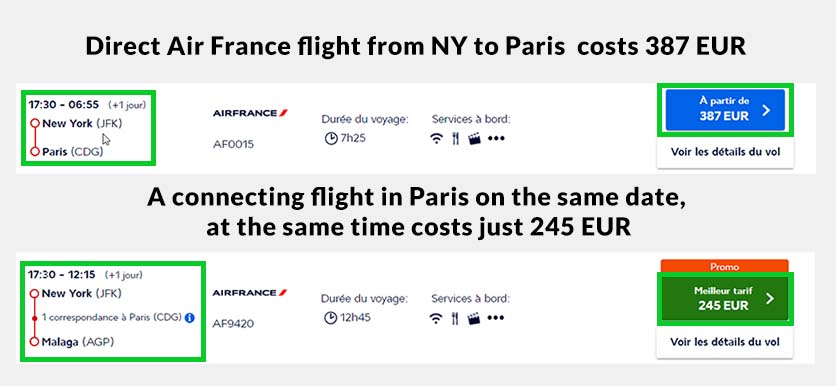
In the example above, I found a flight from New York to Paris where hidden city ticketing saves 142 EUR. The direct flight is 387 EUR. A connecting flight from New York to Malaga, routed through Paris, costs just 245 EUR on the same date. Buy the Malaga ticket, walk out at the Paris layover, save 142 EUR.
That said, hidden city ticketing comes with real constraints:
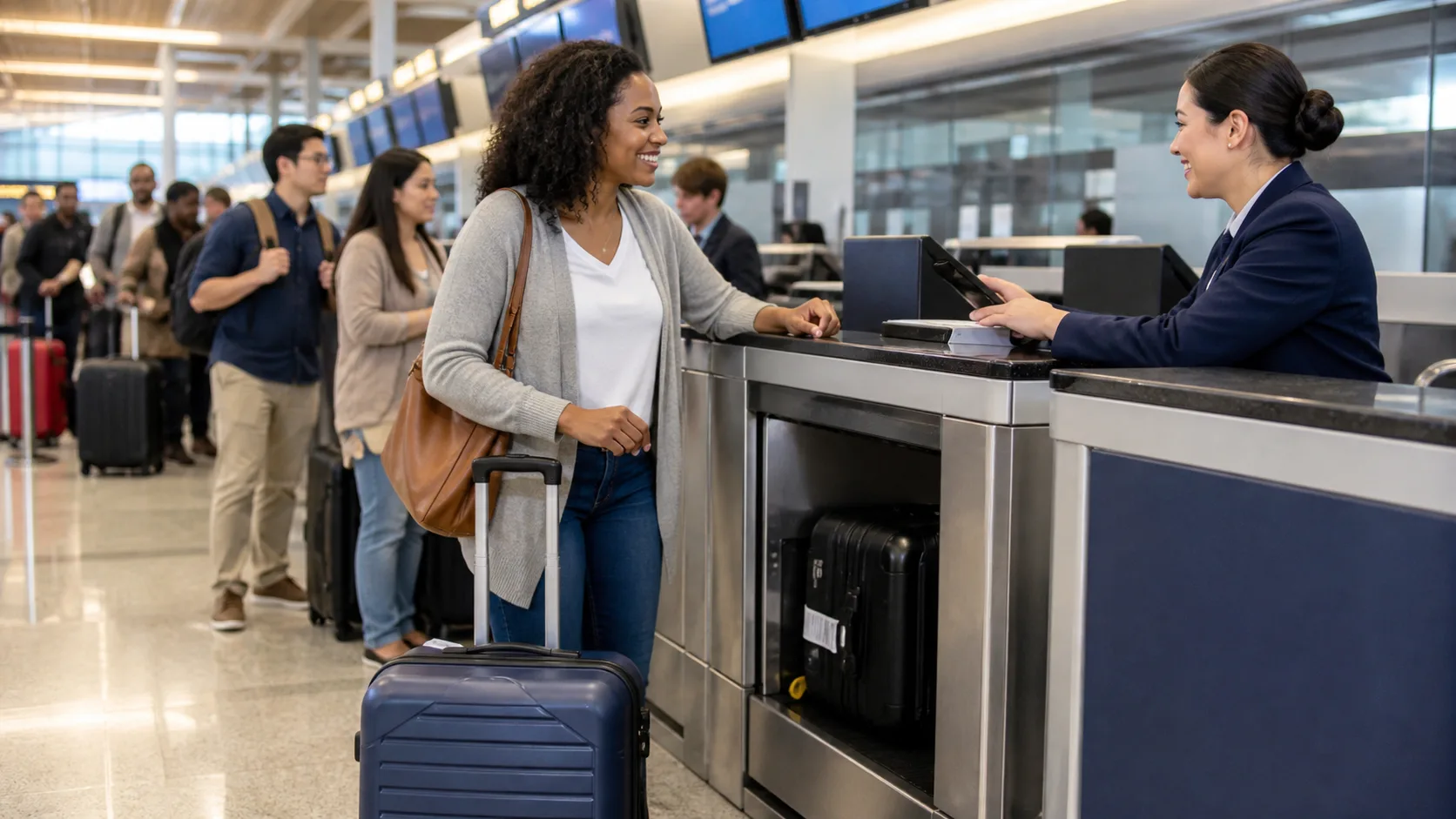
You can’t check bags. Checked luggage gets forwarded to your final ticketed destination automatically. You could ask the airline to short-check your bag to the connecting city, but they almost certainly won’t, since it tips them off that you’re planning to skip a leg.
Routes can change. Airlines occasionally swap out connecting cities, especially during disruptions. If they reroute your trip through a different city than the one you actually wanted, your hidden city plan is dead.
Round trips don’t work. If you skip a leg on the outbound, the return ticket gets canceled too. Always book hidden city flights as one-way only.
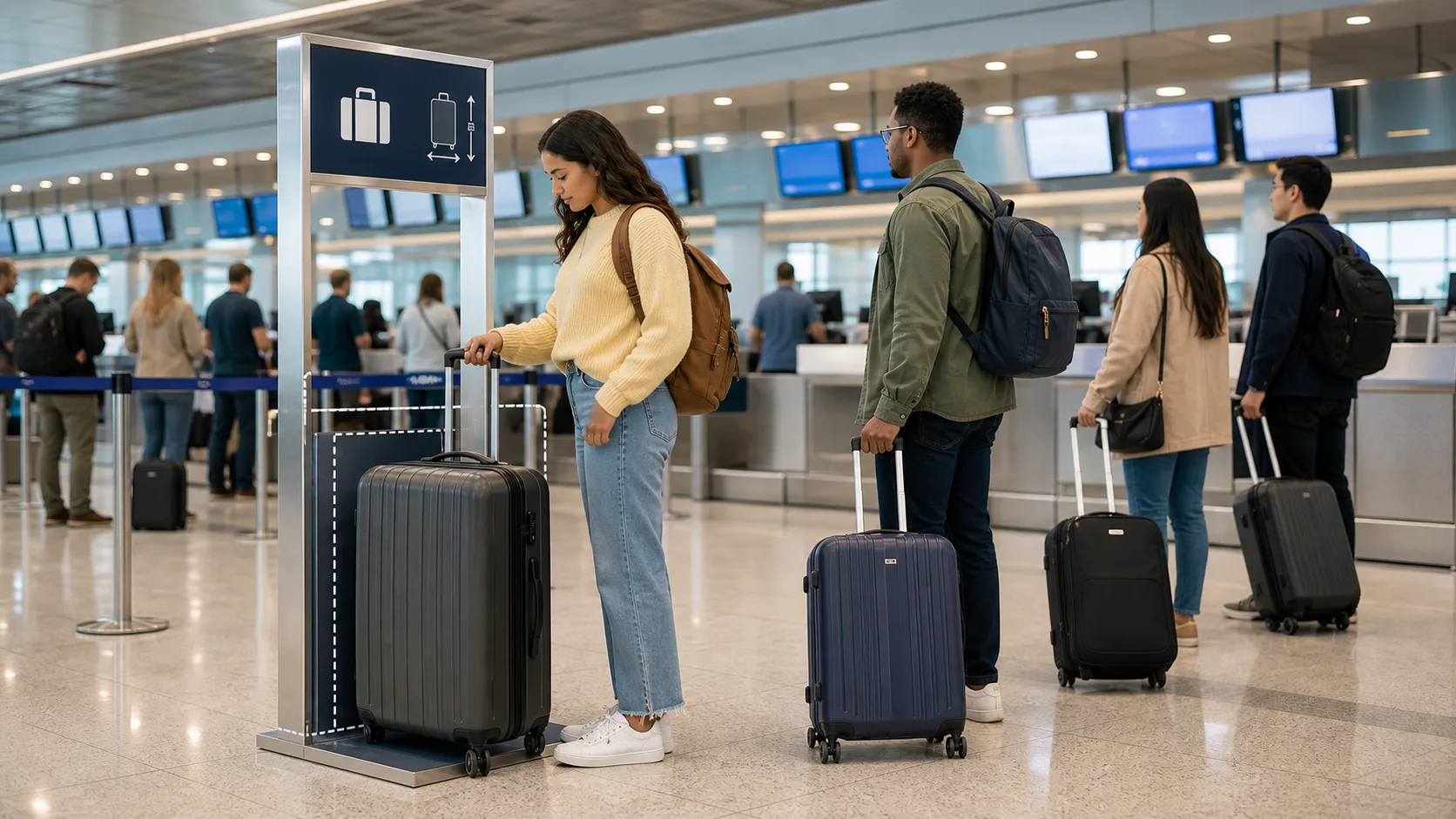
Tip: You can fit two to three weeks of clothing in a single carry-on plus a personal item if you pack smart. The [amazon link=”B07BLD9NMM” title=”Maxlite 5 fabric suitcase”] is what I’d recommend. Spacious, lightweight, and mine still looks brand new after years of regular use.
Quick Answer Guide: Skipping a Leg of a Flight
- Can you skip the first leg? Only with airline approval, and only with a legitimate reason. Otherwise the rest of your ticket gets canceled.
- Can you skip the last leg? Yes, almost always. Worst case is losing some loyalty points.
- Is it legal? Yes. It violates airline contracts but breaks no laws.
- Will airlines cancel my points? They have the right to. They rarely do for one-time offenders.
- Can I check bags? No. They’ll go to the final destination.
- Will it work for round trips? No. Use one-way bookings only.
Final Take on Skipping a Leg of a Flight
Skipping any leg before the last one almost always cancels the rest of your ticket. Don’t try it without airline approval.
Skipping the last leg is the only version that works reliably, and it’s been a legitimate (if frowned-upon) money-saving tactic for decades. The risks are minor for casual users: maybe lose some loyalty points, can’t check bags, can’t book round trips. If those tradeoffs are fine and the savings justify it, hidden city ticketing is one of the few real loopholes left in airline pricing.
Just don’t make a habit of it. Airlines do notice patterns, and frequent users are the ones who actually get penalized.