Reader-supported. We may earn a commission on purchases through our links. Disclosure ›

You may be able to bring a basic can opener on a plane, but TSA does not publish a dedicated rule for can openers. A normal kitchen opener with no exposed point is less likely to cause concern, while a P-38, P-51, Swiss Army knife, or multi-tool with a blade should go in checked luggage.
Lowest-hassle answer: Put any can opener with a sharp cutting tooth, pointed tip, or knife blade in checked luggage. If you only have carry-on, choose a smooth-edge kitchen opener and ask AskTSA about the exact model before travel.
Can You Bring a Can Opener on a Plane? 7 Rules
- There is no dedicated TSA can-opener entry. The decision depends on the opener’s shape, cutting edge, and the officer’s judgment.
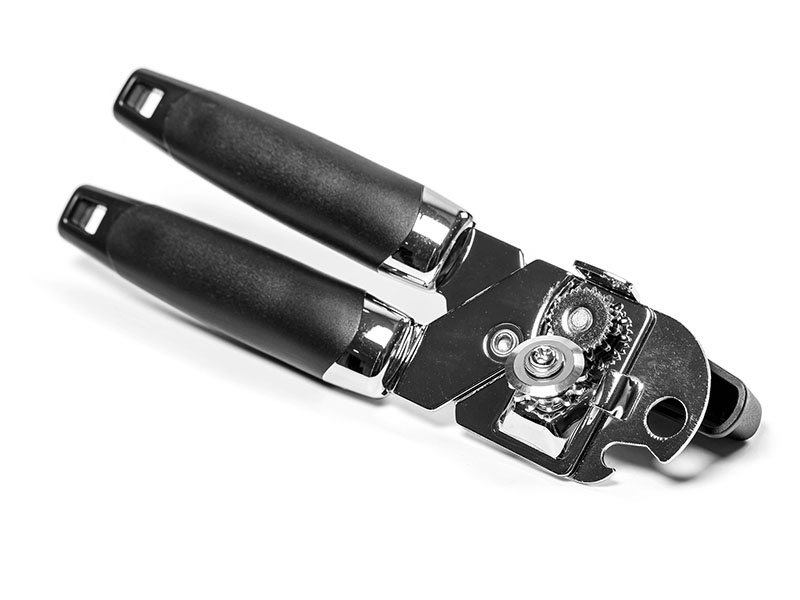
- A basic kitchen opener is lower risk than a pocket opener. A rounded manual model with an enclosed cutting wheel is easier to explain than a pointed P-38 or P-51.
- Knife blades are prohibited in carry-on. A Swiss Army knife or multi-tool does not become carry-on-safe because it also includes a can opener.
- Checked luggage is the safest place for sharp models. TSA says sharp objects in checked bags should be sheathed or securely wrapped.
- The TSA officer makes the final decision. An item can receive extra screening or be rejected even when it is not specifically listed as prohibited.
- International rules can differ. Another country or connecting airport may classify the same tool differently, so check every security authority on the itinerary.
- Canned food has separate screening rules. TSA allows it with special instructions, but cans may be searched and liquid or gel contents can create carry-on problems.
Carry-On and Checked Rules by Can Opener Type
| Can opener type | Carry-on | Checked bag | Practical advice |
|---|---|---|---|
| Standard manual kitchen opener | May be accepted; not specifically listed | Yes | Use checked luggage if the cutting wheel is exposed or looks sharp. |
| Smooth-edge or safety opener | Lower risk, but not guaranteed | Yes | The rounded design is easier to explain, but officer discretion still applies. |
| P-38 or P-51 pocket opener | Risky because of the pointed cutting tooth | Yes | Pack it securely in checked luggage. |
| Swiss Army knife or multi-tool with blade | No | Yes | TSA prohibits multi-tools with knives of any length in carry-on. |
| Electric can opener | Generally not restricted | Generally allowed | Protect batteries and prevent accidental activation if applicable. |
This table applies to U.S. TSA screening. Because TSA does not name ordinary can openers in its database, the carry-on guidance for standalone models is a practical inference from its sharp-object guidance and final-officer-discretion policy.
How to Pack a Can Opener Safely
- Fold, cover, or wrap the cutting part so it cannot injure anyone handling the bag.
- Place it in a small utensil pouch rather than loose beside clothing or electronics.
- Keep a carry-on model easy to reach in case an officer asks to inspect it.
- Do not describe a knife-bearing multi-tool as only a can opener; the knife rule still controls.
- For an unusual model, send AskTSA a clear photo before the trip and keep the response available.
Travel-Friendly Can Opener Options
No can opener is officially “TSA approved.” These affiliate options simply have smoother, less weapon-like designs than pointed military-style openers.
Compact option
Kuhn Rikon Compact Safety Can Opener
A small side-cutting opener designed to leave a smooth edge without an exposed P-38-style point.
Still subject to inspection and officer discretion.
Comfortable grip
OXO Good Grips Smooth Edge Can Opener
A larger side-cutting model that leaves the lid and can without a jagged top edge.
Better for a checked kitchen kit than ultralight travel.
Safer packing
Travel utensil pouch
Keeps the opener covered and separate from clothes, toiletries, and electronics.
Wrap the cutting part before placing it in the pouch.
Can You Bring Canned Food on a Plane?
TSA lists canned foods as allowed in carry-on with special instructions and allowed in checked luggage. However, cans can be difficult to interpret on an X-ray and may receive additional screening. Foods that count as liquids or gels also need to comply with the 3-1-1 rule in carry-on.
If the food is easy to replace, TSA specifically suggests checking it, shipping it, or leaving it at home. Pull-tab cans remove the need for an opener but do not remove the food-screening issue.
Frequently Asked Questions
Does TSA allow can openers in carry-on bags?
TSA does not currently publish a dedicated can-opener entry. A basic manual opener may pass, but the officer can reject an item that appears sharp or threatening. Checked luggage is the lowest-risk choice.
Can I pack a can opener in checked luggage?
Yes. Wrap or cover the cutting wheel or point so it cannot injure baggage handlers or inspectors.
Can I bring a P-38 or P-51 can opener through TSA?
Do not rely on it being accepted in carry-on. These pocket openers use a folding pointed cutting tooth, so checked luggage is safer.
Can I bring a Swiss Army knife with a can opener?
Not in carry-on if it contains a knife blade. TSA prohibits multi-tools with knives of any length from carry-on bags; pack the tool securely in checked luggage.
Are electric can openers allowed on planes?
A normal plug-in electric can opener is not generally restricted, but it is bulky and may need extra screening. For battery-powered models, follow the applicable battery rules and protect the device from accidental activation.
Can I bring canned food on a plane?
TSA lists canned foods as allowed with special instructions in carry-on and allowed in checked bags. Cans may require extra screening, and liquid or gel contents can create 3-1-1 issues, so TSA suggests checking them when practical.
Bottom line: a rounded standalone can opener may pass through U.S. carry-on screening, but TSA gives no model-specific guarantee. Check sharp or pointed openers, and always check a knife-bearing multi-tool.
Author

Can I bring something else on a plane? Search TSA rules ›