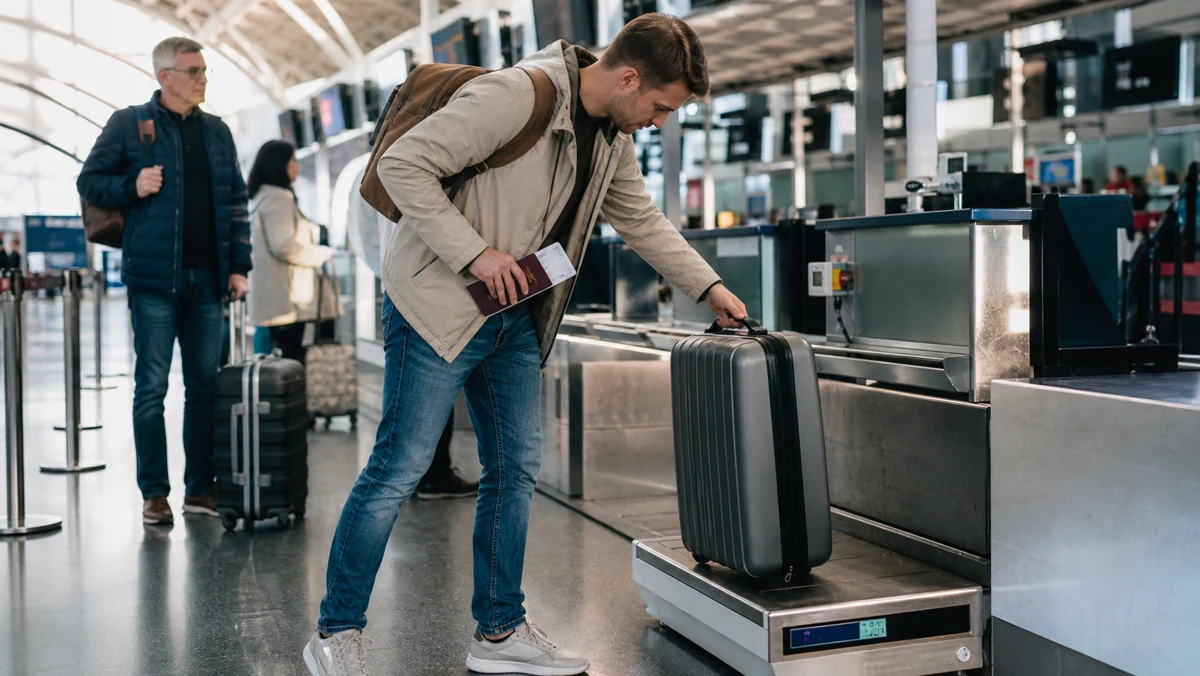
Reader-supported. We may earn a commission on purchases through our links. Disclosure ›
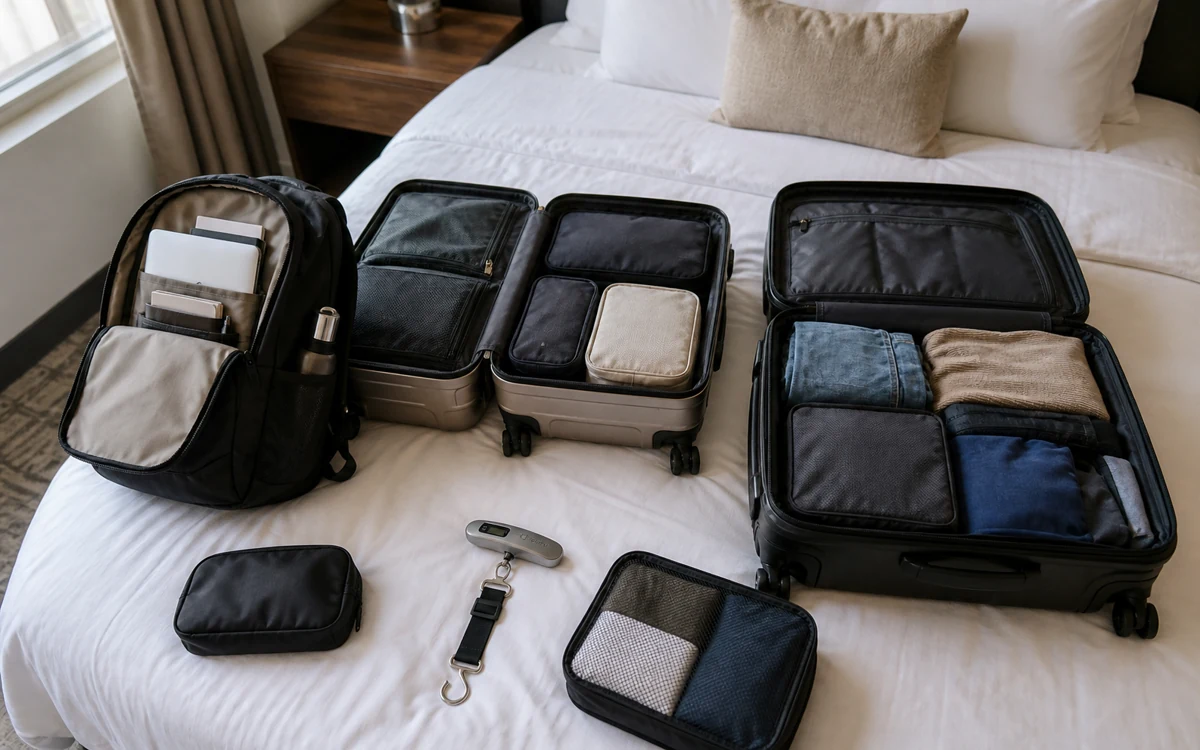
For most international flights, you can bring one personal item, one carry-on, and either zero, one, or two checked bags. The exact baggage allowance international flights include depends on the airline, route, cabin, fare type, loyalty status, and whether your trip is booked on one airline or several partner airlines.
The safest rule is simple: check the baggage calculator or baggage page for the airline operating your flight before you pack. Economy checked bags are often limited to 50 lb (23 kg), but some long-haul, premium-cabin, or route-specific allowances use 70 lb (32 kg), two included bags, or a total weight limit instead.
Check Your Airline’s Baggage Rules in Seconds
Baggage allowance international flights can change by airline, fare, and route. Use the Airline Baggage Rules Finder below to check carry-on size, checked bag size, weight limits, and common baggage fees before you pack.
Want the full tool with all 16 airlines and a side-by-side compare mode? Open the Airline Baggage Rules page.
Baggage Allowance International Flights: The Quick Guide
| Bag type | Common international allowance | What usually changes |
|---|---|---|
| Personal item | Usually 1 small underseat bag | Some basic fares include only this bag, especially on budget carriers. |
| Carry-on bag | Usually 1 overhead bag | International airlines are more likely to enforce carry-on weight limits, sometimes 15 lb (7 kg). |
| Checked bag | Often 0-2 bags, depending on fare and route | Economy is commonly 50 lb (23 kg), but allowances vary widely. |
| Extra bag | Usually available for a fee | Prices often rise for second, third, overweight, and oversized bags. |
| Sports gear or instruments | May count as checked baggage or special baggage | Airlines can set separate size, weight, packing, and fee rules. |
If you want a fast estimate, most international travelers should plan around one personal item, one carry-on, and one checked bag. Then verify the exact allowance in your booking because that estimate is not guaranteed.
Why International Baggage Rules Vary So Much
There is no single worldwide baggage allowance for international flights. Airports do not set your bag limit, and immigration rules do not decide how many suitcases you can check. Your allowance usually comes from the airline’s tariff and baggage policy for your exact itinerary.
That is why two passengers on the same aircraft can have different baggage rules. One may have a basic economy fare with no checked bag, while another may have a standard economy fare with one checked bag included. A third passenger with elite status or a business-class ticket may have two or three checked bags.
Before packing, check your airline’s official baggage page. Major airline examples include American Airlines baggage rules, Delta baggage rules, United baggage rules, Air Canada baggage rules, British Airways baggage essentials, and Emirates baggage information.
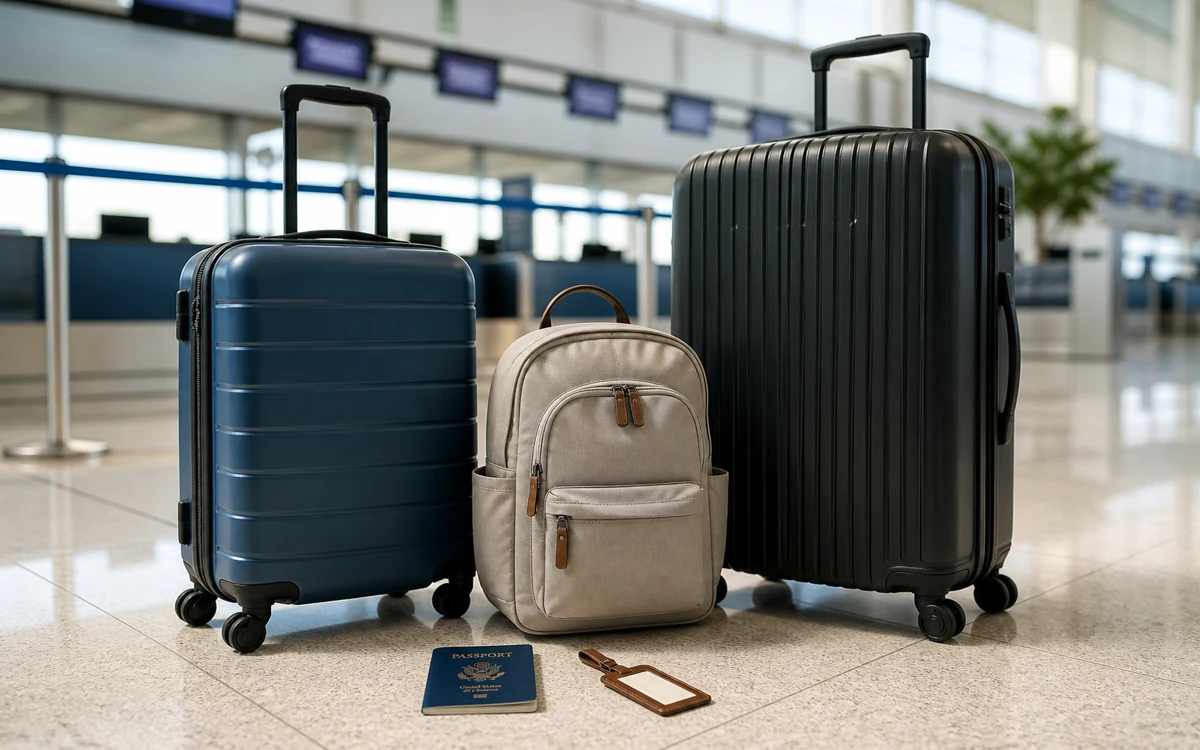
7 Crucial Rules to Check Before an International Flight
1. Your fare type matters as much as your airline
A standard economy fare and a basic economy or light fare can look similar during booking, but the baggage allowance may be completely different. On some routes, the cheaper fare removes the checked bag. On others, it may also limit seat selection, changes, and upgrade options.
2. Carry-on weight limits are more common internationally
U.S. domestic travelers often focus only on carry-on size. For international flights, weight can matter just as much. Some airlines weigh carry-ons at check-in or the gate, and a heavy carry-on may need to be checked. If your trip includes a strict carrier, read our carry-on rules for international flights and our carry-on luggage size guide before choosing a bag.
3. Checked bags are often limited to 50 lb, but not always
The common economy checked-bag limit is 50 lb (23 kg), with a common size limit of 62 linear inches when you add length, width, and height. But this is only a common pattern, not a universal rule. Some airlines, cabins, and international routes allow 70 lb (32 kg), while others charge as soon as a bag passes 23 kg.
If suitcase size is the bigger issue, our checked baggage size guide explains the 62-linear-inch rule and what it means when shopping for a checked suitcase.
4. Some routes use piece concept, while others use weight concept
On a piece-concept route, the airline limits how many bags you can check and how much each bag can weigh. On a weight-concept route, the airline may give you a total checked weight allowance, such as 30 kg or 40 kg, and let you split it across bags within the airline’s rules.
This difference matters on long-haul trips, especially with airlines based outside North America. A traveler used to one 50 lb bag may be surprised to see a 30 kg total allowance, a 7 kg carry-on limit, or a route where cabin class changes the entire calculation.
5. Partner-airline itineraries can be confusing
If your ticket includes multiple airlines, your baggage rules may be based on the operating carrier, the marketing carrier, or the most significant carrier on the itinerary. The wording varies by region and ticket. What matters practically is that the baggage allowance shown in your confirmation is more reliable than a generic airline page.
For connecting trips, also check whether your bags are checked through to the final destination. Our guide to luggage on connecting flights with different airlines explains when you may need to collect and recheck bags.
6. Special items may not follow normal suitcase rules
Golf clubs, skis, surfboards, bicycles, musical instruments, medical devices, strollers, and car seats can have separate rules. Some items count as a checked bag if they fit within the normal allowance. Others require advance notice, special packing, or a separate fee.
7. Paying early is often cheaper than paying at the airport
If you need an extra bag, buy it online after checking the fee table. Many airlines charge less before check-in than they do at the airport counter. This is especially true for low-cost carriers, where airport baggage fees can be much higher than prepaid baggage.
Carry-On vs Checked Baggage on International Flights
For short international trips, a personal item and carry-on may be enough. It saves checked-bag fees, avoids baggage claim, and reduces the risk of delayed luggage. The tradeoff is that carry-on liquids, sharp objects, and heavy items are more restricted.
Checked luggage is better when you need full-size toiletries, larger clothing layers, hiking gear, gifts, or a longer wardrobe. It also helps when a strict airline has a low carry-on weight limit. The downside is cost, waiting time, and the possibility of delay or damage.
For a practical split, use our guide on what to pack in carry-on vs checked luggage. Keep medicine, documents, chargers, valuables, one change of clothes, and anything needed during the first 24 hours in your personal item or carry-on.
How to Check Your Exact Allowance Before Packing
- Open your airline booking or confirmation email, not just a generic search result.
- Look for your fare name, cabin, route, and operating airline.
- Check personal item size, carry-on size, carry-on weight, checked-bag weight, and checked-bag dimensions separately.
- Confirm whether the allowance applies to each direction of travel.
- If the trip has partner airlines, check the baggage line on the actual ticket receipt.
- Prepay for extra bags if you already know you need them.
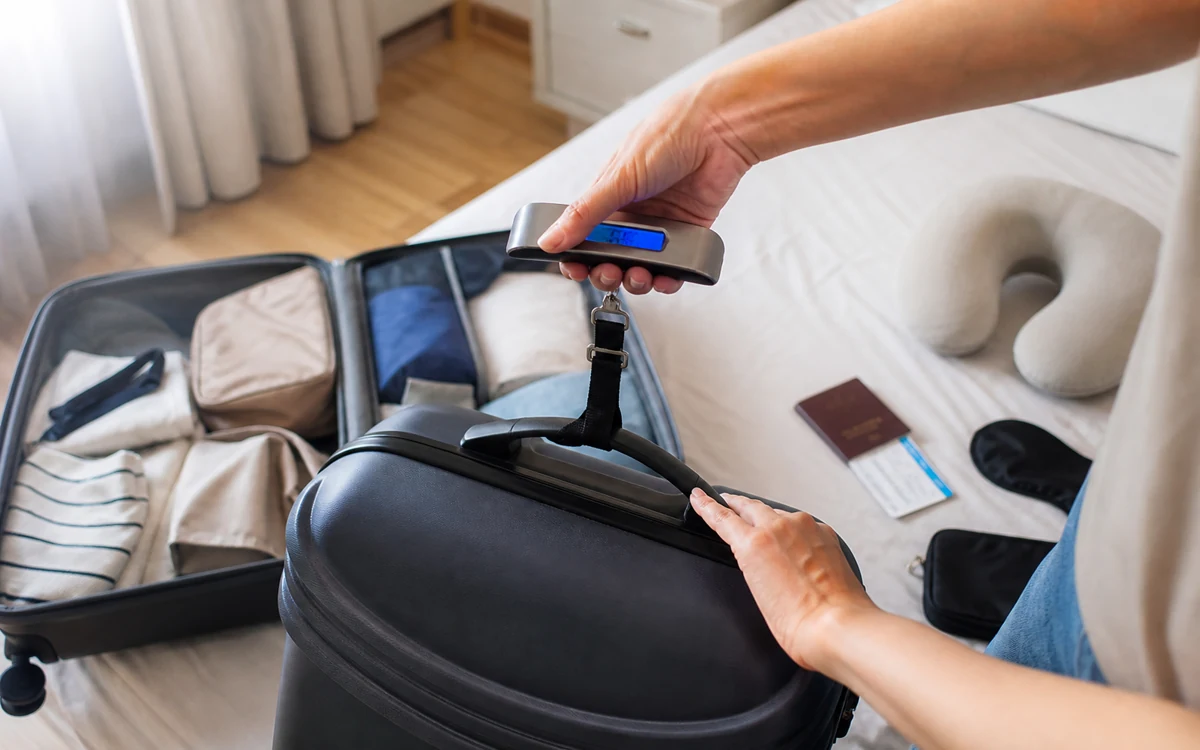
How Much Should Your Checked Bag Weigh?
For many economy travelers, the practical target is 47-48 lb if the limit is 50 lb (23 kg). That small buffer helps because home luggage scales, hotel scales, and airport scales may not match perfectly.
If your route uses kilograms, do not round too closely. A 23 kg allowance is about 50.7 lb, but airlines usually judge the bag in the unit shown in their system. A bag that is fine on your bathroom scale can still be tagged overweight at the counter if it is packed to the exact limit.
Our guide to weighing luggage covers the easiest ways to check your bag at home, including what to do if you do not have a luggage scale.
What Not to Pack in Checked Baggage
Baggage allowance tells you how many bags you can bring. Security and safety rules decide what can go inside those bags. For U.S. departures, the TSA liquids rule limits carry-on liquids to containers of 3.4 oz (100 ml) or smaller inside a quart-size bag, but larger liquids are usually allowed in checked baggage if the item itself is permitted.
Lithium batteries are different. Spare lithium batteries and power banks generally belong in carry-on baggage, not checked baggage. The FAA PackSafe lithium battery guidance is the source to check before flying with power banks, camera batteries, or battery-powered gear.
What to Do if Your Bag Is Overweight
If your checked suitcase is over the limit, you usually have four options: remove items, move dense items to your carry-on if allowed, pay the overweight fee, or add another checked bag. The cheapest answer depends on the airline’s fee chart.
For example, if a second checked bag costs less than an overweight fee, splitting items into two bags can be cheaper. But if your route includes a strict carry-on weight limit, moving shoes, books, or toiletries into your carry-on may just create a new problem at the gate.
If you are traveling for a long stay, study abroad, relocation, or a gear-heavy trip, compare airline extra-bag fees against luggage shipping. Shipping can be useful, but it is not automatically cheaper once customs forms, delivery windows, insurance, and pickup timing are included.
Realistic Examples by Trip Type
One-week Europe trip
A carry-on and personal item may be enough if you pack light and do laundry once. This works best when all flights have similar carry-on rules. If a regional European connection has a small or low-weight carry-on limit, a checked bag may be less stressful.
Two-week long-haul vacation
Most travelers are better off checking one suitcase and carrying essentials onboard. Keep the checked bag under the standard limit, then use packing cubes or a small personal item to keep documents, medicine, and electronics accessible.
Budget airline international trip
Read the fare details before paying. The lowest fare may include only a personal item. Adding a carry-on, checked bag, seat assignment, and airport check-in can erase the savings if you do not price the full trip.
Family international trip
Check each passenger’s allowance separately. Children with paid seats often get baggage allowances, while lap infants may have separate rules for strollers, car seats, diaper bags, and checked baggage. Do not assume one large family suitcase is better, because overweight fees can be more expensive than splitting weight across multiple allowed bags.
International Baggage Checklist
- Confirm the exact baggage allowance international flights on your booking include.
- Measure your carry-on, including wheels and handles.
- Weigh your checked bag before leaving for the airport.
- Leave a 2-3 lb buffer under the checked-bag limit.
- Keep batteries, power banks, documents, medicine, and valuables in carry-on baggage.
- Prepay for extra baggage online if you know you need it.
- Check partner-airline rules if your itinerary uses more than one airline.
Final Thoughts
The biggest mistake with international baggage is assuming that one familiar rule applies everywhere. It does not. International baggage allowance changes by airline, fare, route, and cabin, and the cheapest ticket often has the most restrictive baggage rules.
Check your allowance before buying if baggage is important, then check it again before packing. A few minutes with the airline’s official baggage page can save you from overweight fees, forced gate-checking, and repacking your suitcase on the airport floor.
How many checked bags are allowed on international flights?
Many international economy tickets include one checked bag, but some include zero and others include two. The allowance depends on airline, route, fare type, cabin, and loyalty status. Check the baggage line in your booking confirmation for the most accurate answer.
Is baggage allowance international flights based on the airline or the airport?
Baggage allowance is usually based on the airline and ticket rules, not the airport. Airports handle check-in and screening, but the airline decides how many bags are included and what fees apply.
What is the usual checked baggage weight limit for international flights?
A common checked-bag limit in economy is 50 lb or 23 kg. Some routes, cabins, and airlines allow 70 lb or 32 kg, while others use total weight allowances. Always check your exact route before packing.
Can I bring two checked bags on an international flight?
Sometimes. Two checked bags may be included on certain long-haul routes, premium cabins, or tickets with elite status. On other fares, the second checked bag requires a fee.
Do international flights include a free carry-on?
Most full-service international airlines include one carry-on and one personal item, but low-cost carriers and basic fares may charge for overhead carry-ons or enforce strict weight limits.
What if my connecting airlines have different baggage rules?
Use the baggage allowance shown on your ticket receipt and check the operating carriers. Partner-airline itineraries can follow special rules, and you may need to collect and recheck luggage on some connections.
Is it cheaper to buy international baggage online or at the airport?
It is often cheaper to buy extra baggage online before check-in or before arriving at the airport. Airport counter fees are commonly higher, especially with low-cost airlines and overweight bags.