Reader-supported. We may earn a commission on purchases through our links. Disclosure ›
There are many types of backpacks, but most of them solve one of five problems: daily carry, work or school, air travel, hiking, or sport-specific gear. The best backpack is not the one with the longest feature list. It is the one that fits your body, fits your trip, and keeps the items you actually carry easy to reach.
This guide breaks down 23 common types of backpacks, what each one is good at, where each one becomes annoying, and how to choose between similar styles. If you are buying a backpack for flying, pay extra attention to the travel backpack, personal item backpack, and laptop backpack sections because those categories overlap the most.
Quick Guide to the Main Types of Backpacks
| Backpack type | Best for | Typical size | What to check first |
|---|---|---|---|
| Daypack | School, errands, simple daily carry | 15-30 L | Shoulder straps, back padding, water bottle pocket |
| Laptop backpack | Work, school, commuting, digital travel | 18-35 L | Laptop sleeve size and charger organization |
| Carry-on backpack | One-bag trips and city travel | 30-45 L | Outside dimensions, clamshell opening, harness comfort |
| Personal item backpack | Underseat flying and budget airline trips | 18-30 L | Soft structure and airline underseat dimensions |
| Hiking backpack | Trails, camping, outdoor trips | 20-75 L | Hip belt, ventilation, hydration compatibility |
| Camera backpack | Cameras, drones, lenses, fragile tech | 15-35 L | Padded dividers and quick side access |
If you want one bag for most situations, start with a 20-30 L laptop backpack for everyday use, a 25-35 L personal item backpack for flying, or a 35-45 L travel backpack if you want to pack clothing and skip a suitcase. For airline-specific sizing, use our backpack carry-on vs personal item guide before buying.
Useful Backpack Picks to Compare
These are broad Amazon search links, not hardcoded product claims. Use them to compare current sizes, reviews, and prices against the backpack type that fits your trip.
One-bag travel
Carry-on travel backpacks
Look for a 35-45 L clamshell backpack with padded straps, compression, and carry-on-friendly dimensions.
Check current price, dimensions, and return policy.
Work and flights
Travel laptop backpacks
A good choice if you carry a laptop, chargers, documents, headphones, and a small clothing layer.
Confirm laptop sleeve size before ordering.
Airline saver
Underseat personal item backpacks
Best when you want the backpack to fit under the seat instead of relying on overhead-bin space.
Measure the packed bag, not just the listed capacity.
How to Choose the Right Backpack Type
Before comparing brands, decide what the bag needs to do. A backpack that is excellent on a trail can be awkward under an airplane seat. A tidy office backpack can be frustrating if you are trying to pack four days of clothing. Most bad backpack purchases happen when the style is right but the use case is wrong.
- For flights: choose a soft-sided personal item backpack if it needs to fit under the seat. Our personal item size guide can help you compare airline limits.
- For one-bag trips: choose a 35-45 L travel backpack with a clamshell opening, compression straps, and a comfortable harness.
- For work or school: choose a laptop backpack with a padded sleeve, a water bottle pocket, and enough room for chargers without crushing paperwork.
- For hiking: prioritize fit, ventilation, a hip belt, and load control. Pockets matter, but comfort matters more once the pack is heavy.
- For Europe or old-city travel: a backpack is easier on stairs and cobblestones, but a suitcase can be easier if you pack heavy. Our backpack vs suitcase in Europe guide explains that tradeoff.
- For fragile gear: choose a specialty bag, such as a camera backpack or laptop backpack, instead of relying on a basic daypack.
Everyday Backpacks
1. Daypacks
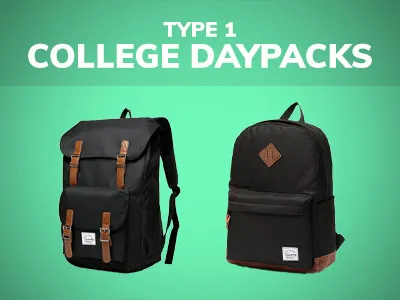
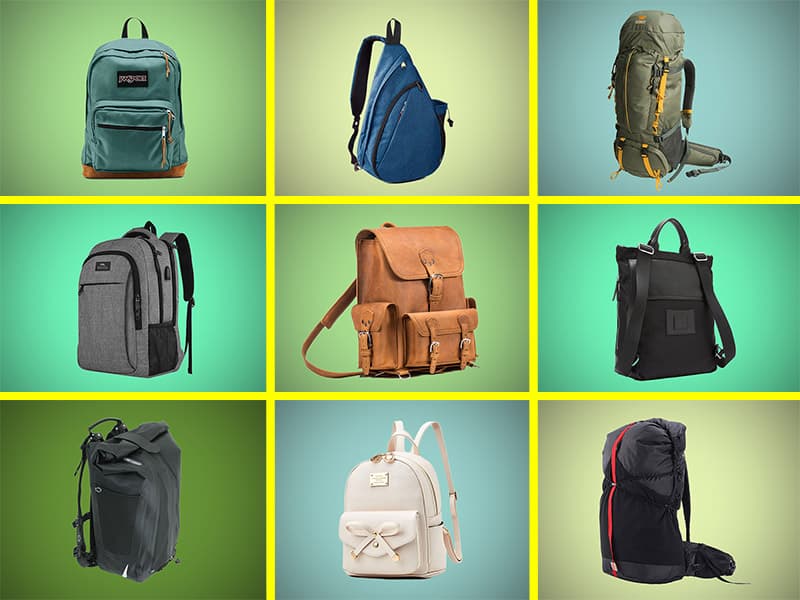
A daypack is the classic school, college, office, and errand backpack. It usually has one main compartment, one or two front pockets, soft sides, and basic shoulder straps. It is easy to live with because it is light, affordable, and flexible.
Best for: students, casual commuters, short day trips, and people who want one simple backpack. Watch out for: weak laptop protection, thin padding, and poor rain resistance on cheaper models.
2. Laptop Backpacks
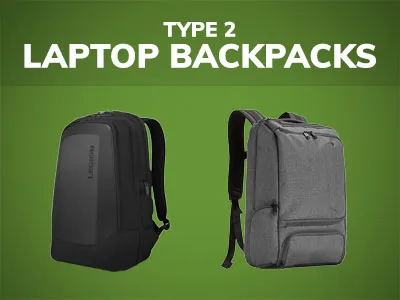
Laptop backpacks add a padded laptop sleeve or a separate laptop compartment. Better models also include charger pockets, tablet sleeves, document storage, luggage pass-through straps, and structured back panels.
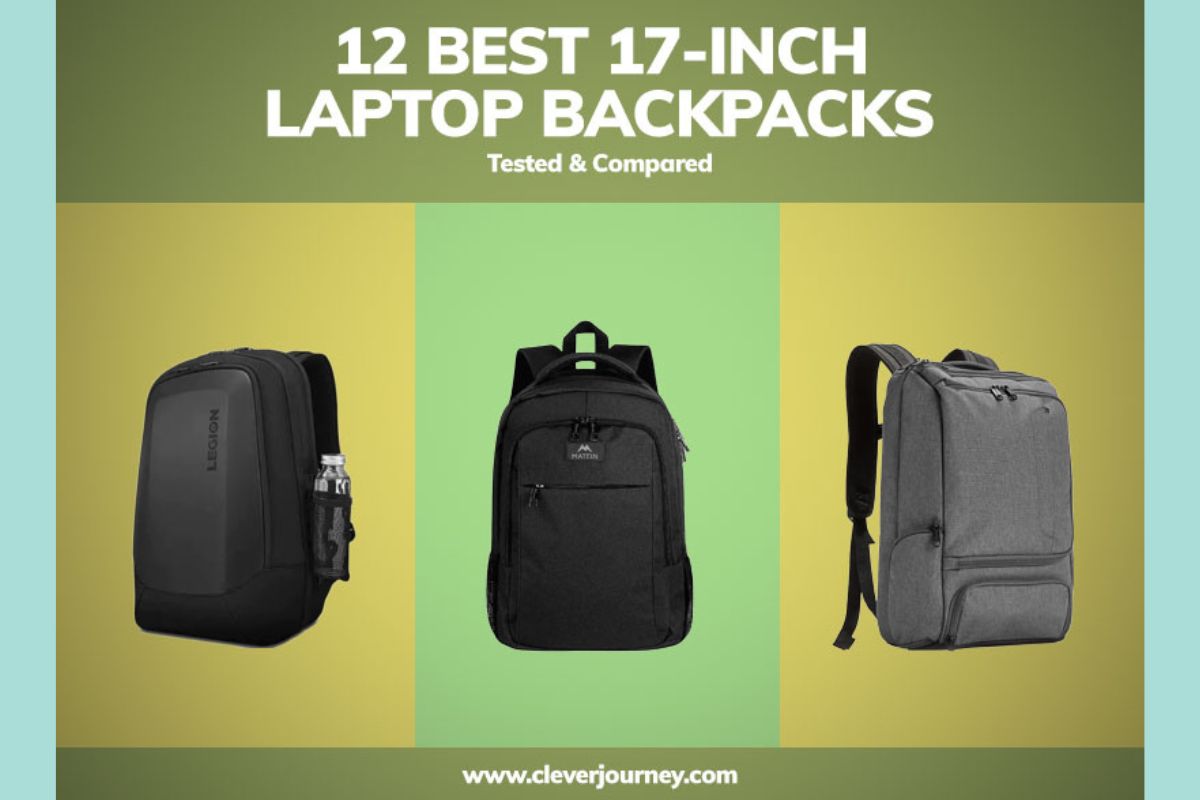
Best for: work, school, commuting, and digital nomad travel. Watch out for: bulky organizer panels that leave less room for clothes. If you carry a larger laptop, compare options in our 17-inch laptop backpack guide.
3. Mini Backpacks
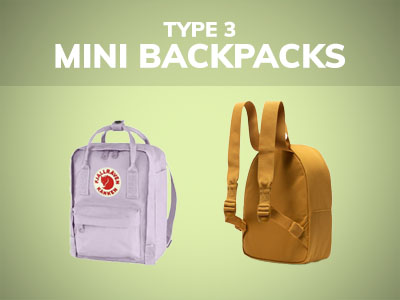
Mini backpacks are small fashion or sightseeing bags. They work for a wallet, phone, sunglasses, snacks, and a few daily items, but they are not meant for laptops, bulky clothes, or serious travel gear.
Best for: sightseeing, theme parks, concerts, and light everyday carry. Watch out for: limited capacity and thin straps that become uncomfortable if you overpack.
4. Sling Backpacks
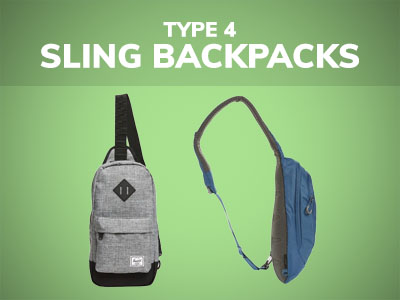
Sling backpacks use one strap worn across the body. They are easier to swing to the front than a normal backpack, which is useful when you want quick access to a phone, wallet, passport, camera, or boarding pass.
Best for: city travel, compact camera kits, and minimalist carry. Watch out for: uneven weight distribution on long walking days.
5. Leather Backpacks
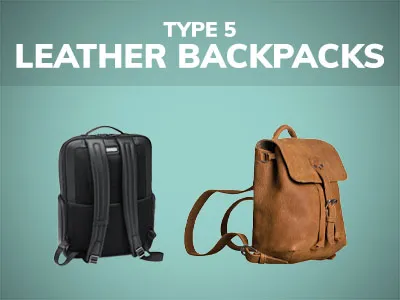
Leather backpacks are chosen for style, structure, and long-term durability. Good leather can age well, but it is heavier than nylon or polyester and usually needs more care around rain and scratches.
Best for: office use, city travel, and travelers who prefer a polished or vintage look. Watch out for: weight, higher prices, and less breathable back panels.
Travel Backpacks
6. Carry-On Backpacks
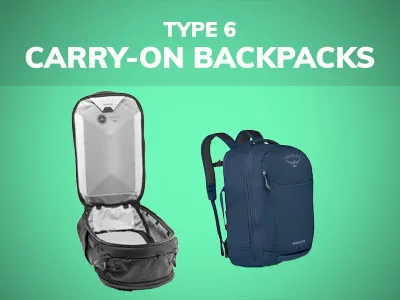
Carry-on backpacks are built to replace a small suitcase. They usually open like a clamshell, use rectangular dimensions, and include compression straps, laptop storage, lockable zippers, and a stronger harness.
Best for: one-bag travel, train trips, hostel travel, and places where rolling luggage is annoying. Watch out for: heavy packed weight and airline size limits. A 40 L backpack can feel easy in your living room and miserable after a mile of walking.
7. Personal Item Backpacks
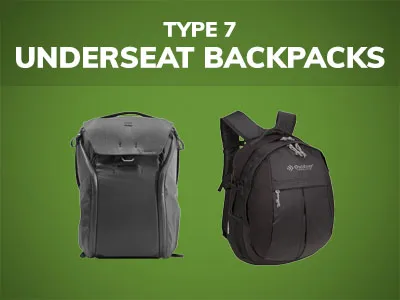
A personal item backpack is sized to fit under the seat in front of you. These bags are smaller than full carry-on backpacks and are usually designed around laptop storage, soft structure, and easy in-flight access.
Best for: budget airline fares, weekend trips, and travelers who do not want to fight for overhead-bin space. Watch out for: strict underseat dimensions. If you are unsure whether your backpack qualifies, start with our guide to what counts as a personal item on a plane.
8. Wheeled Backpacks
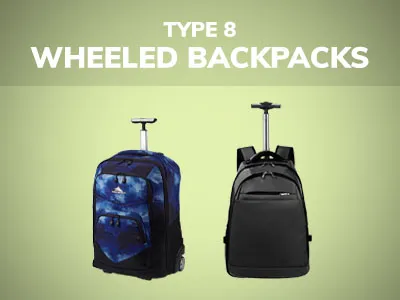
Wheeled backpacks combine backpack straps with wheels and a telescoping handle. They can be helpful when you want rolling convenience but still need straps for stairs, rough sidewalks, or short carries.
Best for: students with heavy books, travelers with back concerns, and mixed airport/city trips. Watch out for: extra empty weight, less packing space, and backpack straps that are usually less comfortable than a true backpack.
9. TSA-Friendly Laptop Backpacks
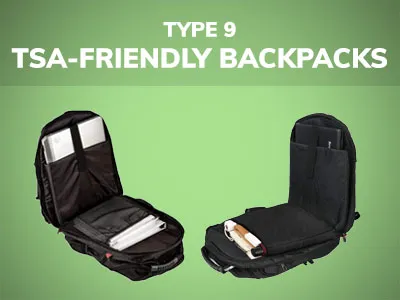
TSA-friendly laptop backpacks are designed so the laptop section can lie flat during screening. They can make airport security smoother, but they do not guarantee that your laptop will always stay inside the bag.
Best for: frequent flyers, business travelers, and laptop-heavy trips. Watch out for: assuming the design overrides a TSA officer’s instructions.
10. Packable Daypacks
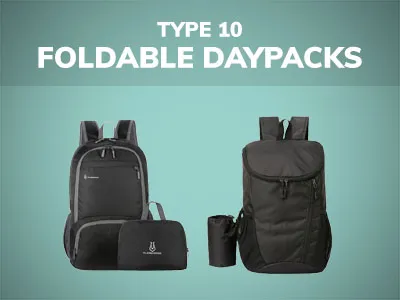
Packable daypacks fold into a small pouch or their own pocket. They are useful as a secondary bag for sightseeing, groceries, beach trips, laundry, or overflow items on the way home.
Best for: lightweight travel backup and day trips. Watch out for: thin straps, limited structure, and weak laptop protection.
Hiking and Camping Backpacks
11. Frameless Hiking Backpacks
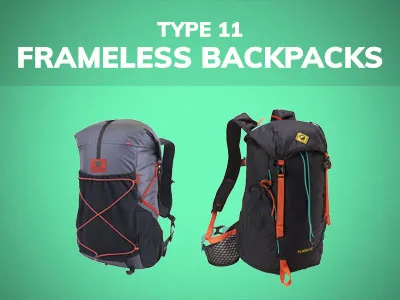
Frameless hiking backpacks are soft trail packs without a rigid internal frame. They are lighter and simpler than framed packs, but they depend on careful packing and are best with lighter loads.
Best for: ultralight hiking, short camping trips, and experienced packers. Watch out for: poor load transfer if you pack too much weight.
12. Internal Frame Hiking Backpacks
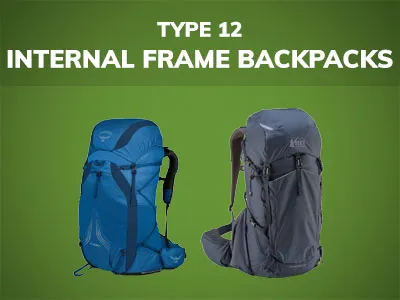
Internal frame hiking packs move weight toward your hips and keep the load more stable on trails. They usually have padded hip belts, sternum straps, load lifters, hydration sleeves, and outside attachment points.
Best for: multi-day backpacking, camping, and heavier outdoor loads. Watch out for: airline fit, dangling straps, and bulky frames. If you ever need to fly with one, read our guide to checking a backpack as luggage.
13. Tactical Backpacks
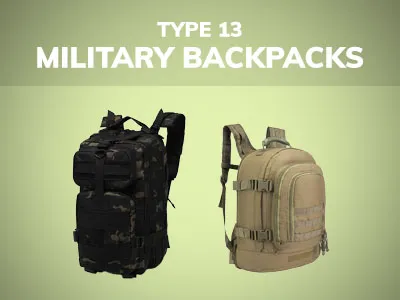
Tactical backpacks are rugged utility packs with MOLLE webbing, thick fabric, compression straps, and modular attachment points. They can be very durable, but they are often heavier than similar hiking or travel bags.
Best for: outdoor gear, emergency kits, range bags, and modular organization. Watch out for: weight and styling that may feel too technical for offices or city trips.
Sports Backpacks
14. Drawstring Gymsacks
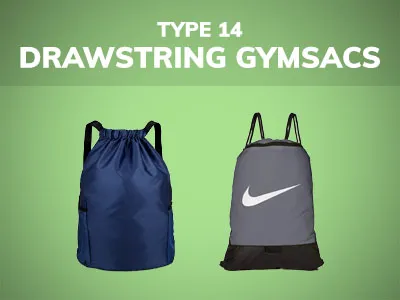
Drawstring bags are simple fabric sacks with cord straps. They are cheap, flat, and easy to stash in another bag, but they provide almost no support or protection.
Best for: gym shoes, swim gear, laundry, and casual sports gear. Watch out for: thin straps, no structure, and poor comfort with heavy items.
15. Hydration Packs
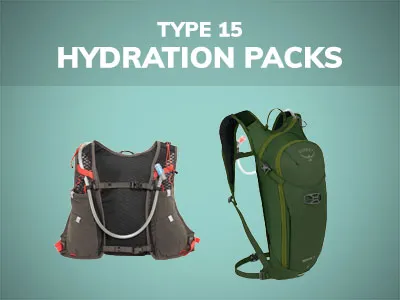
Hydration packs include a water reservoir and drinking tube. Some are tiny running or cycling packs, while larger versions add space for layers, snacks, tools, and a first aid kit.
Best for: biking, hiking, running, festivals, and hot-weather day trips. Watch out for: cleaning the reservoir and limited storage on small models.
16. Running Backpacks and Vests
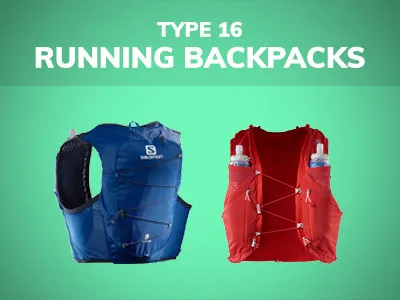
Running packs and vests sit close to the body so they bounce less. They usually use soft flask pockets, phone pockets, small snack pockets, and stretchy rear storage.
Best for: trail running, races, and fast hiking. Watch out for: tight fit and very limited non-running use.
17. Cycling Backpacks
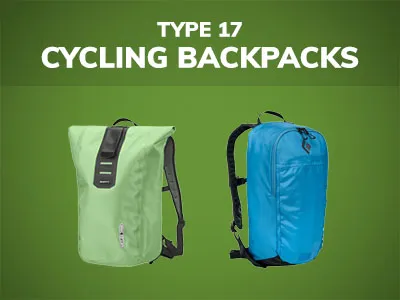
Cycling backpacks are shaped to stay stable while riding. Many include reflective details, helmet attachment points, hydration compatibility, waterproof materials, or roll-top closures.
Best for: bike commuting and short rides. Watch out for: sweaty backs and limited laptop protection unless the bag is made for commuting.
18. Ski and Snowboard Backpacks
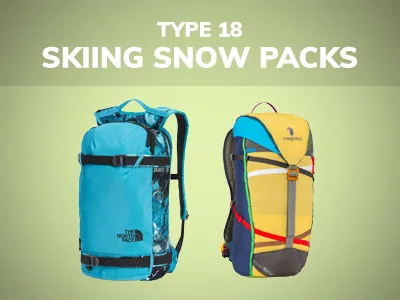
Ski and snowboard backpacks are winter sports packs with attachment points for skis or boards, goggle pockets, avalanche-tool compartments, insulated hydration routing, and glove-friendly pulls.
Best for: resort skiing, backcountry skiing, and snowboarding. Watch out for: specialty features you may not use away from the mountain.
19. Hunting Backpacks
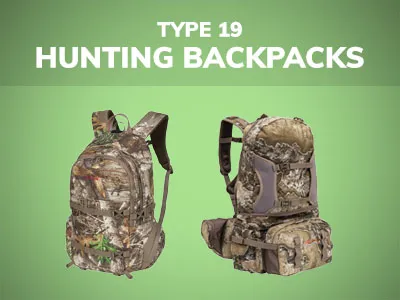
Hunting backpacks are outdoor gear packs built around quiet fabrics, camouflage, weapon or bow carry systems, meat shelves, hydration sleeves, and heavy-load support.
Best for: hunting trips and rugged outdoor carry. Watch out for: weight, bulk, and limited everyday styling.
Hybrid and Multi-Purpose Backpacks
20. Duffel Backpacks

Duffel backpacks are duffel bags with backpack straps. They are useful for clothes, shoes, gym gear, and bulky equipment, especially when you prefer one large opening instead of many small pockets.
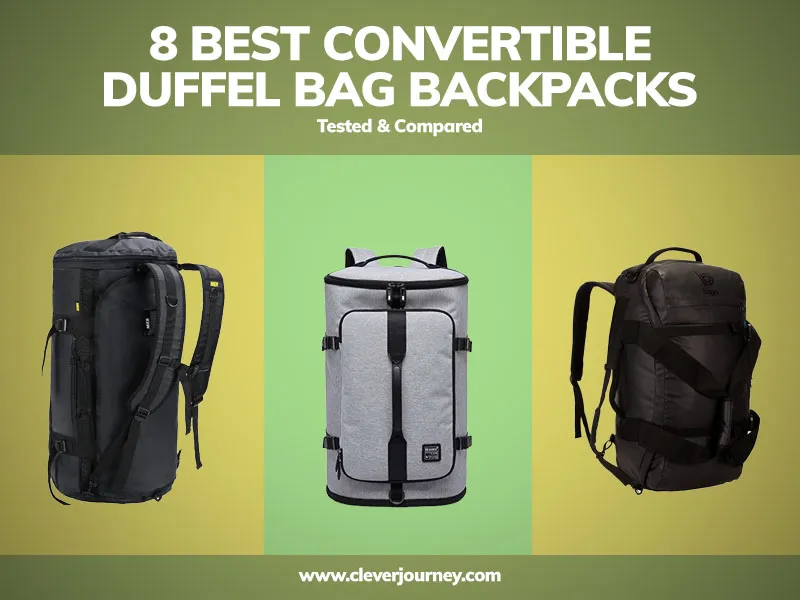
Best for: gym trips, road trips, adventure travel, and gear hauling. Watch out for: weaker organization and less comfortable carry when fully loaded. For travel-specific options, compare our hybrid duffel backpack picks.
21. Tote Backpacks
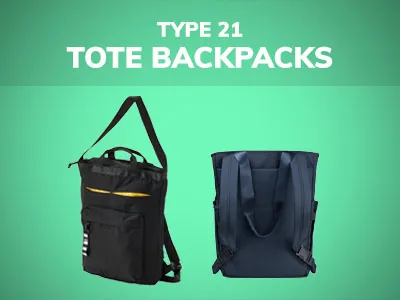
Tote backpacks switch between tote handles and backpack straps. They are useful when you want a cleaner office look but still want the option to carry the bag hands-free.
Best for: commuting, teachers, office use, and light travel. Watch out for: thinner backpack straps and less ergonomic weight distribution.
22. Messenger Backpack Hybrids
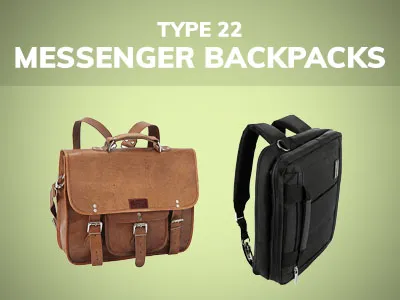
Messenger backpack hybrids convert between a shoulder bag, crossbody bag, and backpack. They can work well for a laptop and documents, especially when you want quick side access.
Best for: office commuting and compact tech carry. Watch out for: conversion hardware that adds weight without making the bag more comfortable.
23. Camera Backpacks
Camera backpacks use padded dividers to protect cameras, lenses, drones, tripods, and accessories. Many models also include a laptop sleeve and side-access panels so you can reach a camera quickly without opening the whole bag.
Best for: photographers, drone users, and creators traveling with fragile gear. Watch out for: heavy empty weight and less flexible packing space when you are not carrying camera equipment.
My Practical Advice
For most travelers, the best backpack is not the most specialized one. A good laptop backpack or personal item backpack usually gets used more than a tactical pack, giant hiking pack, or camera backpack unless your hobbies demand those features. If you are buying for travel, measure the outside of the bag when it is packed. Liter capacity helps you compare storage, but airlines care about dimensions.
If you are packing a backpack for a flight, keep laptops, power banks, medicine, documents, and valuables in the backpack rather than checked luggage. Then use packing cubes or pouches to keep the main compartment from becoming one large pile. Our international travel packing checklist is a good next step if you are building a travel setup from scratch.
Frequently Asked Questions About Types of Backpacks
What is the most versatile type of backpack?
A 20-30 L laptop backpack is the most versatile type of backpack for most people because it works for commuting, school, errands, and many short trips. Frequent flyers may get more use from a personal item backpack if it fits under the airplane seat.
What type of backpack is best for travel?
For one-bag travel, choose a 35-45 L carry-on backpack with a clamshell opening. For budget airlines or short trips, choose a smaller personal item backpack that fits under the seat.
What is the difference between a backpack and a rucksack?
In everyday use, the words often overlap. Rucksack is more often used for rugged hiking or military-style packs, while backpack is the broader term for any two-strap bag worn on the back.
Can any backpack be used as a carry-on?
Only if it fits the airline’s carry-on size and weight rules. A small daypack, laptop backpack, or travel backpack may qualify, but a large hiking pack may need to be checked.
What backpack type is best for your back?
The best option is a backpack that fits your torso, has padded shoulder straps, keeps weight close to your body, and includes a sternum strap or hip belt for heavier loads. Overpacking matters more than the backpack label.
What size backpack is best for everyday use?
Most people do well with 18-28 L for everyday use. Go smaller if you only carry personal items, or larger if you carry gym clothes, a laptop, lunch, and extra layers.