Reader-supported. We may earn a commission on purchases through our links. Disclosure ›

The 100ml rule limits each liquid container to 100 milliliters (3.4 oz) or less in carry-on baggage. All containers together must fit inside a single quart-sized (approximately 1-liter) clear, resealable zip-lock bag. One bag per passenger. This applies at airports worldwide, including all US airports where TSA uses their 3-1-1 rule. Same concept, same numbers.
In checked baggage, there is no liquid size restriction. You can pack a full-size shampoo bottle, a 200ml perfume, or anything else without the 100ml limit applying.
The US Version: TSA’s 3-1-1 Rule
TSA calls this the 3-1-1 rule, which breaks down as:
- 3.4 oz (100 ml) or less per container
- 1 quart-sized clear zip-lock bag for all of them
- 1 bag per passenger
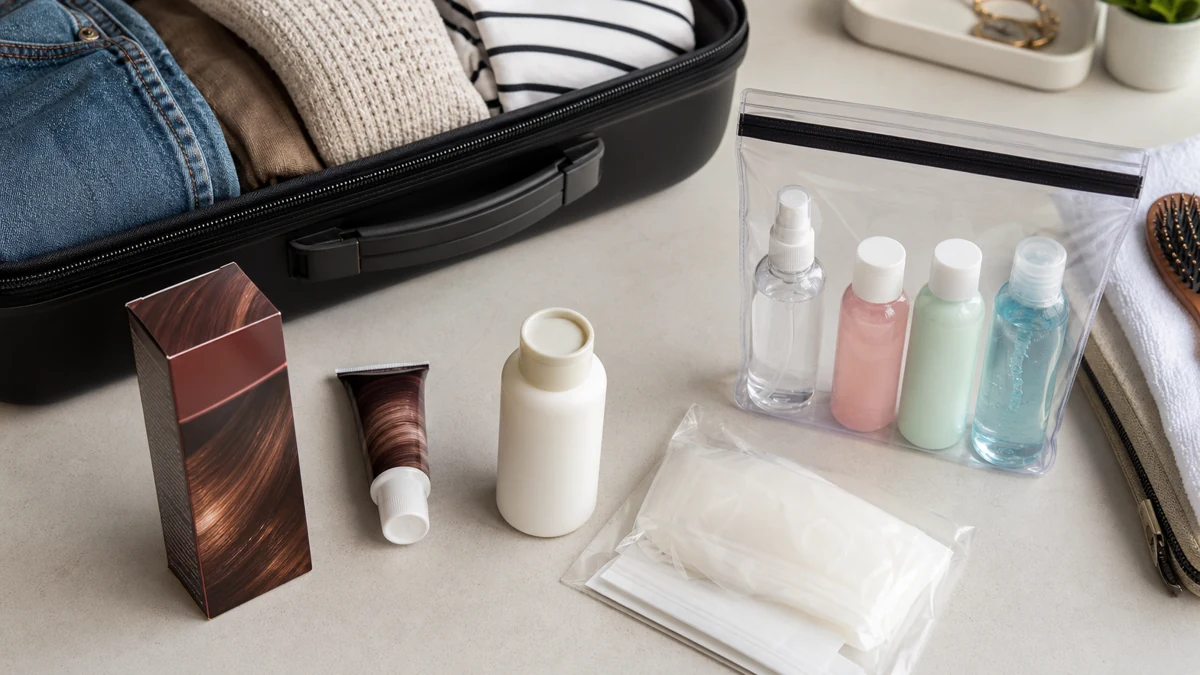
The quart-sized bag is roughly 7 x 8 inches. You don’t need a specific brand. Any clear, resealable bag of approximately that size works. You’ll place this bag in the bin separately from your carry-on when going through security, so pack it on top of or outside everything else for easy access.
If you have TSA PreCheck, you don’t need to remove your liquids bag at the checkpoint. It stays in your bag.
What Counts as a Liquid
The 100ml rule applies to anything that is or behaves like a liquid, including gels, creams, pastes, and aerosols. Common items that get caught at security:
- Shampoo, conditioner, and body wash
- Toothpaste (gel or paste)
- Liquid soap and hand sanitizer
- Sunscreen (lotion, spray, or gel)
- Face moisturizer and serum
- Foundation, tinted moisturizer, lip gloss, mascara
- Perfume and cologne
- Deodorant (roll-on or gel; stick deodorant is solid and doesn’t count)
- Hair gel, mousse, and pomade
- Eye drops and contact lens solution
- Peanut butter, hummus, jam, spread, and similar food pastes
- Yogurt, pudding, applesauce (gel-like consistency)
A useful test: if it pours, spreads, squirts, or squeezes, it’s a liquid under TSA rules.
What Doesn’t Count as a Liquid
These don’t fall under the 100ml rule and don’t need to go in your quart bag:
- Solid deodorant (stick form)
- Powder products (dry shampoo powder, setting powder, loose eyeshadow)
- Solid shampoo and conditioner bars
- Lip balm in stick form (ChapStick, Burt’s Bees)
- Mascara in solid/cake form
- Solid perfume
- Dry snacks, crackers, candy, and whole fruit
- Medications in pill, tablet, or capsule form
Solid alternatives to your liquid products are worth considering for travel. A solid shampoo bar replaces a shampoo bottle without touching your quart bag space. Same with solid conditioner, solid face wash, and solid perfume.
Exemptions to the 100ml Rule

Several categories of liquids are exempt from the 100ml limit in carry-on:
- Prescription medications: You can bring liquid medications over 100ml in carry-on. TSA recommends keeping them in original prescription bottles and labeling them clearly. You may need to declare them separately at the checkpoint.
- Over-the-counter liquid medications: Reasonable quantities are allowed. If the amount seems excessive, an agent may question it.
- Baby formula, breast milk, and toddler food: These are explicitly exempt from the 100ml rule. You don’t need a baby present to bring breast milk. These can be in quantities over 100ml per container and don’t need to be in the quart bag, but you do need to declare them at the checkpoint for separate screening.
- Duty-free liquids purchased after security: Liquids bought at duty-free shops after the security checkpoint are allowed on the plane even if they exceed 100ml, as long as they’re in a security-sealed bag with the receipt visible. The rules get complicated on connecting flights. If you’re connecting through a European airport, duty-free liquids from your origin airport may be confiscated at the connecting checkpoint. Check the rules for your specific route.
- Ice packs and gel packs for medication: Frozen solid ice packs are allowed. If they’re partially melted (liquid state), they fall under 3-1-1 rules.
Why 100ml?
The 100ml limit was established in 2006 after UK authorities foiled a plot to bring liquid explosives onto transatlantic flights. Security researchers determined that 100ml or less of a liquid is unlikely to be enough to create a viable explosive threat, while still allowing passengers to carry essential personal care items. The limit was adopted by TSA and most international aviation authorities as a coordinated response.
The quart bag rule adds another layer: even if someone tried to carry many 100ml containers, the one-liter bag caps the total liquid volume a single passenger can bring. Modern airport CT scanners can now identify specific liquid compositions, which has led to some airports experimenting with relaxing the 100ml rule. The EU has been moving toward abandoning it at airports with advanced scanning, though this has been delayed several times.
Practical Tips for Packing the Quart Bag
- Use travel-sized bottles (30ml to 100ml) and refill them from full-size products at home. GoToob and similar silicone squeeze bottles work well for thick products like shampoo and conditioner.
- Pack your quart bag in the outer pocket of your carry-on so you can pull it out quickly at security without emptying your whole bag.
- For a 3 to 5 day trip, a single quart bag usually covers: shampoo, conditioner, body wash, toothpaste, face moisturizer, sunscreen, and a small perfume. You may need to cut items or buy mini versions.
- Buy toiletries at your destination for longer trips. Most cities have pharmacies or supermarkets with everything you need, and you avoid the quart bag entirely for those products.
Frequently Asked Questions About the 100ml Liquid Rule
Does the 100ml rule apply to all flights?
Yes, it applies to almost all flights worldwide, including domestic US flights (under the 3-1-1 rule) and international flights. A handful of airports are experimenting with advanced CT scanners that allow larger liquids, but for the vast majority of airports, the 100ml limit in carry-on is standard.
Can I bring multiple 100ml containers?
Yes, as many as will fit in one quart-sized clear zip-lock bag. There’s no limit on the number of containers, only on the total volume the quart bag can hold. A standard quart bag holds roughly 8 to 10 travel-sized containers depending on their shape.
What happens if I bring a liquid over 100ml to security?
The container will be confiscated. You can’t pour out excess liquid to get under the limit. The rule applies to the container size, not the amount of liquid in the container. A 200ml shampoo bottle that’s half full still doesn’t pass, because the agent can’t verify how full it was when it went through.
Are medications exempt from the 100ml rule?
Yes. Prescription medications, over-the-counter liquid medications in reasonable quantities, baby formula, breast milk, and toddler food are all exempt from the 100ml limit. You’ll need to declare them separately at the security checkpoint for screening.
Can I buy liquids at duty-free and bring them on the plane?
Yes, if they’re purchased after the security checkpoint and kept in the original security-sealed bag with the receipt. On connecting flights through certain countries (especially EU airports), these bags may be confiscated at the connecting security checkpoint. Check your route specifically before relying on this.
Does TSA PreCheck mean I don’t have to remove my liquids?
Yes. With TSA PreCheck, you do not need to remove your quart bag of liquids from your carry-on at the security checkpoint. It stays in your bag and goes through the scanner with everything else.
Is toothpaste considered a liquid?
Yes. Toothpaste (paste or gel) is treated as a liquid under the 100ml rule. A standard 100ml toothpaste tube is exactly at the limit. Anything larger goes in checked baggage.
Is stick deodorant considered a liquid?
No. Stick deodorant is a solid and doesn’t fall under the 100ml rule. It can go in your carry-on without the quart bag. Roll-on deodorant and gel deodorant are liquids and must follow 3-1-1.
Author
Can I bring something else on a plane? Search TSA rules ›